AFCON, Literature, and Distant Kilns
One October evening in 2000, there was a major upset at the FA Cup final in Nigeria. With sheer grit and resolve, Niger Tornadoes, a second-division team stunned the mighty Rangers of Enugu, beating them to lift the historical trophy after an own goal by one of the Rangers players. I remember going to the stadium in Lagos that day, holding a copy of Cyprian Ekwensi’s 1986 novel Jagua Nana’s Daughter, and joining thousands of other fans thronging the Surulere National Stadium to support two Nigerian clubs. The theater of modern fandom exists on social media these days. But back then, being a fan meant performing your role as cast in the frenzied play scripted by the wild roars of such iconic venues. This was a time when the sweat of bodies on a football pitch and the ink on the pages of Nigerian literary classics were hewn from the same fount. They flowed from the rusty streams of Ibadan, swooshing with the rhythms and urgency of Onitsha. Today, as our strikers and storytellers are increasingly refined in distant kilns, there is a frayed sense of what once was, as home comes to signify a loss to be mourned, a slippery boundary etched by the vanishing echoes of local talents.
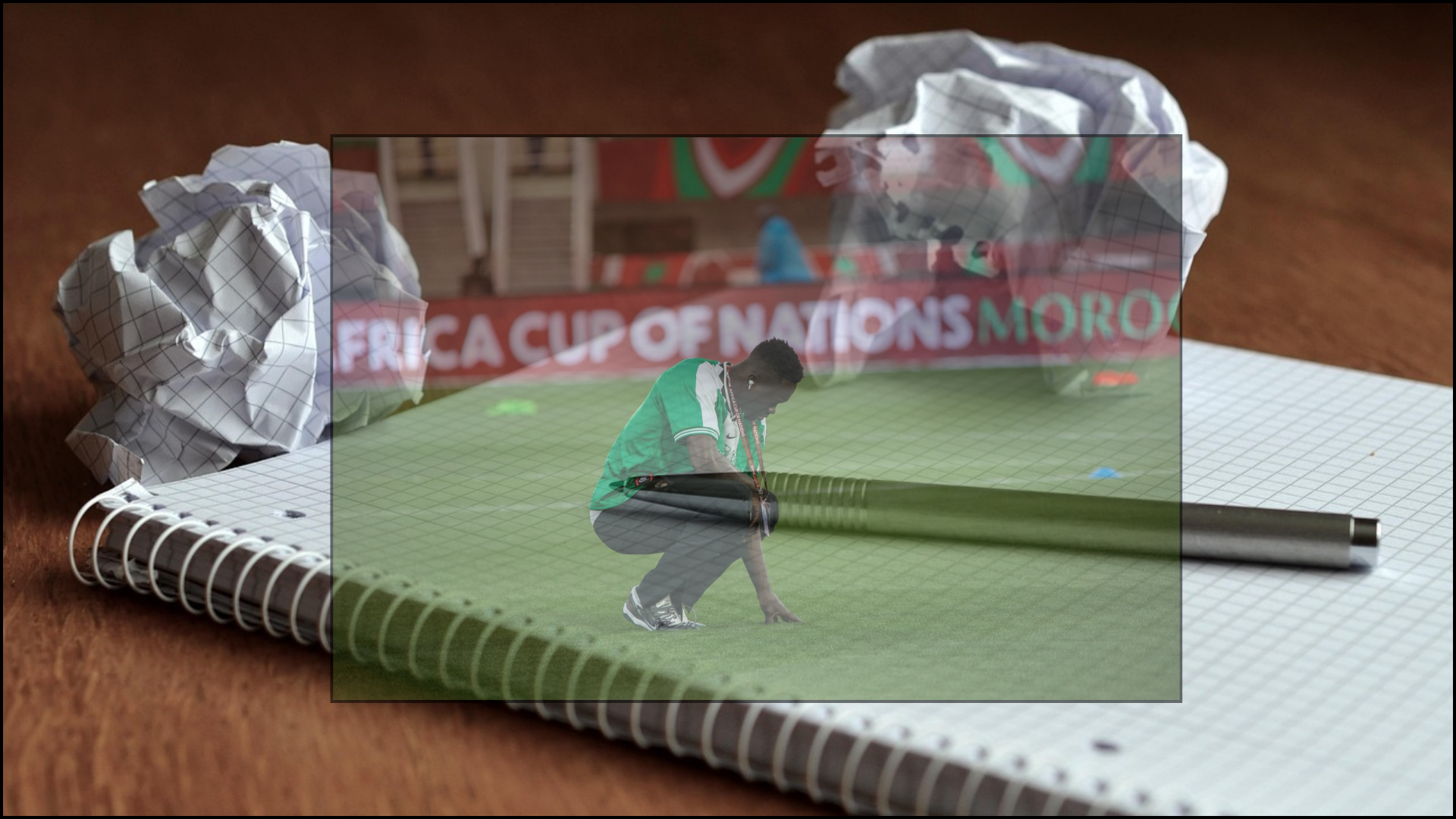
Nigerian literature, we are told, no longer speaks to the people it claims to represent. Its audience appears to have moved on, deterritorialized into the distant arms of elsewhere. Readers now inhabit the wired capillaries of algorithmic spaces and are mostly uninterested in the relentless flicker that remains in the literary embers in non-digital creative spaces. So writes Tolu Daniel about the supposed death of Nigerian literature. While the rumored death of literature is, indeed, often a lament of a cultural elite (ironically diasporic, or with some ties abroad), the same logic of disappearance also casts a long shadow over Nigerian football. AFCON 2025 arrives in the week of Christmas with Nigeria fielding no home-based players in Morocco. That matters significantly. From literature to soccer, the story is eerily similar, iterative of dynamics that compel us to ask what happens when home becomes invisible in the very cultural productions meant to represent it and unroll its many promises. What happens when the sights of home are rendered ghoulishly strange by actors from other places?
If names like Teju Cole and Chimamanda Adichie make Nigerian literature internationally visible, Europe-based and diaspora-descended players dominate the Nigerian senior men’s team, the Super Eagles, players from the Nigerian Premier Football League are largely invisible in the national team. This hasn’t always been the case, though. You may remember Sunday Mba, Nigeria’s hero at the 2013 Africa Cup of Nations Final in Johannesburg. Mba became famous for scoring the decisive goal that secured Nigeria’s third AFCON title. Not just because he repeated his quarter-final heroics against an Ivory Coast captained by Chelsea legend Didier Drogba, nor because his goal was a beautiful solo effort against a Burkina Faso team that held its own and sought a major upset. But because Mba’s goal was the last gasp of local visibility in the narratives of Nigerian soccer; indeed, the last major domestic dance on the arena of international football. And let’s not forget the coach of the Super Eagles for that year’s AFCON was Stephen Keshi, whose success was a monumental win for the authority of local merits and techne.
With publishing infrastructure and institutional programs such as the famous M.F.A. degree becoming central to new production of Nigerian literary culture and taste in the Global North, there are echoes of the infrastructural collapse in Nigerian football. The days are long gone when the stands of Nigerian stadia were colored by the local aesthetics and flamboyance of fans donning the flags of historical clubs such as 3SC, Stationery Stores, Rangers and BCC Lions of Gboko. These Nigerian clubs not only, until the early 1990s during the first wave of Nigerian footballing talent to Belgium, provided personnel for the national teams but were also at the heart of football’s unruly dalliance and many adventures with the country’s politics and history. Rangers represented Igbo pride in Enugu, 3SC carried Yoruba identity in Ibadan, while Kano Pillars was the darling pride of Nigeria’s North. The cultural ecosystems and ethnopolitical fabrics of Nigeria could be gauged through the various sites of fandom and rivalry these clubs offered in the convivial intensities of their intimate solidarities. Long before the markets of European soccer and especially the English Premier League captured the Nigerian football gaze, these clubs were the locations of culture and the geographies of pleasure, serving as repositories of identity and local flair.
Some of Nollywood’s narratives of origin have linked the International Monetary Fund’s structural adjustment programs to the decline of local social and cultural life in Nigeria in the 1980s. These programs crippled the consumption of media and narrative pleasures, leading to the abandonment of media infrastructures. In the domain of sports, the same impact was felt as stadium facilities and other sporting infrastructures necessary for vibrant local football leagues essentially collapsed. The parallel trajectories are striking; just as SAP gutted the material infrastructure for local cultural production, collapsing stadiums, and abandoning training facilities, it also destroyed the economic conditions that sustained local reading publics and literary institutions. As cinema-going and stadium-going cultures began to wane, both Nigerian literature and Nigerian football became export-oriented industries, producing for external consumption while local markets withered.
Today, the perception is that, like its nomadic writers, Nigeria’s best sportsmen are abroad; that outside the shores of the country, rather than in Lagos or Kaduna, is where fans would find more technically gifted and competent players. It is the same logic in literature, where many assume that quality Nigerian writing comes from abroad and not in Ibadan, Enugu or Jos. Nigerian literature’s diaspora dominance both mirrors and is mirrored by football, two cultural fields where international legitimacy increasingly requires departure from the familiar, where home becomes the place you leave to be taken seriously; the place you embrace from a far country. This understanding provokes urgent questions, including whether these patterns represent regimes of alienation, or a systemic evacuation of local cultural ecosystems. Or do they reflect a cosmopolitan and worldly sensibility that diasporic circulation fosters? Or, more ominously, can they be simultaneously read as both, imagined as diaspora success built on the falling bricks of local institutional failure?
To be clear, the winners for the Nigeria Prize for Literature in 2024 and 2025 are Nigerian-based writers. With Olubunmi Familoni winning the 2024 Children’s Literature prize for The Road Does Not End, and Oyin Olugbile winning the 2025 Prose Fiction prize for her novel Sanya, one gets the sense of an enduring local talent that thrives despite diaspora authors also competing. Unlike Nigerian literature though, this year’s AFCON has zero NPFL players, marking a pattern less pronounced in the women’s teams and at age-grade levels where local representation remains stronger. Yet even the junior teams have underperformed in recent tournaments, prompting debates about whether their struggles stem from insufficient local player development, the menace of age cheating, or from their own growing reliance on diaspora talent.
The representation of NPFL players in Super Eagles squads has steadily weakened, with AFCON 2025 marking the first time in recent memory that the team has no domestic league players. At AFCON 2013, Mba (Warri Wolves) was complemented by defender Godfrey Oboabona (Sunshine Stars) in a backline that included Kenneth Omeruo, once on the books of Chelsea. Nigeria did not qualify for the next two editions of AFCON but returned later with just a single domestic player in two subsequent tournaments, namely the goalkeepers Ikechukwu Ezenwa of Katsina United F.C. (2019) and Enyimba FC’s John Noble (2021). This trend of declining representation of the Nigerian league has remained visible since then and, as in the recent online discourses around Nigerian prizes and literary controversies, is symptomatic of larger cultural politics and affect.
The country’s broader sociopolitical decline suggests we are not just exporting our best people; we have outsourced the very parameters for determining what it means to be a Nigerian. I don’t endorse any needless binarism between home-based talents and their diasporic colleagues that often erupts on online football forums, but I am also asking about how footballers lay claims to places they inhabit from afar, and how local football administrators who have relinquished the development of local players ask of legitimate outsiders to sing the songs of a foreign nation. Yet, the tragic irony is that we mustn’t misrecognize the agency of the diasporic subject who left home or was born abroad but still chooses to sculpt the narratives of their being and subjectivity through a Nigerian homeland that sometimes suffocates. For those in the former group, exile is effected by the realities of collapsed dreams and infrastructure and leaving home is not a question of desire, but of practical necessity and common sense. The best of Nigerian writers and players do not leave Nigeria because they want to, but because home becomes the place dreams are buried in a nightmare of perpetual stasis and untold confusion. They did not leave because home became the mouth of a shark, but because they abhorred the future fantasized for them by the jaws of rotten mouths.
There is a specific crisis that accounts for the dispersal of Nigerian literary and football agency, and this crisis and its implications need to be addressed. After all, what is the nature of the Eagles that are hatched outside of their nest? Sociologically speaking, something has happened to our country that is fundamentally connected to a progressive culture of corruption in our national life and the deterioration of basic public institutions and systems. This systemic decay plays out in our cultural productions.
There is often the suggestion that some players in the domestic league have poor attitude and are less personally driven to succeed. In fact, former Eagles player Omeruo explained recently that most of “the players who come to the national team from the local leagues” are content to complete the team and “don’t compete.” Unfortunately, Omeruo’s criticism, while valid at the individual level, obscures the institutional failures that disincentivize home-grown success and the jarring discords of a system that doesn’t reward local excellence. His observation nonetheless reflects Nigeria’s perennial quest for talent abroad.
To sum it all up, it would be remiss to romanticize local talents or even demonize our diaspora. Far from that, my main remit is to ask what gets lost when “home” becomes invisible and a Nigerian football identity, like its literary establishment, is consecrated abroad. This question haunts both the football pitch and the literary page, demanding answers neither field seems ready to provide. Perhaps, though, one answer lies not in what we’ve gained through global visibility, but in what we’ve relinquished in the name of it.
James Yeku teaches African studies and digital humanities at the University of Kansas. His latest book, The Algorithmic Age of Personality, explores literary controversies, feuds, and cancel culture in social media discourses on African literature.