
Same Tune, Different Lyrics: A Review of “When I Say Africa”
Reviewer: Mosunmola O. Adeojo
Documentary: When I Say Africa
Director: Cassandra Herrman
Producers: Cassandra Herrman, Linda Peckham, Kathryn Mathers
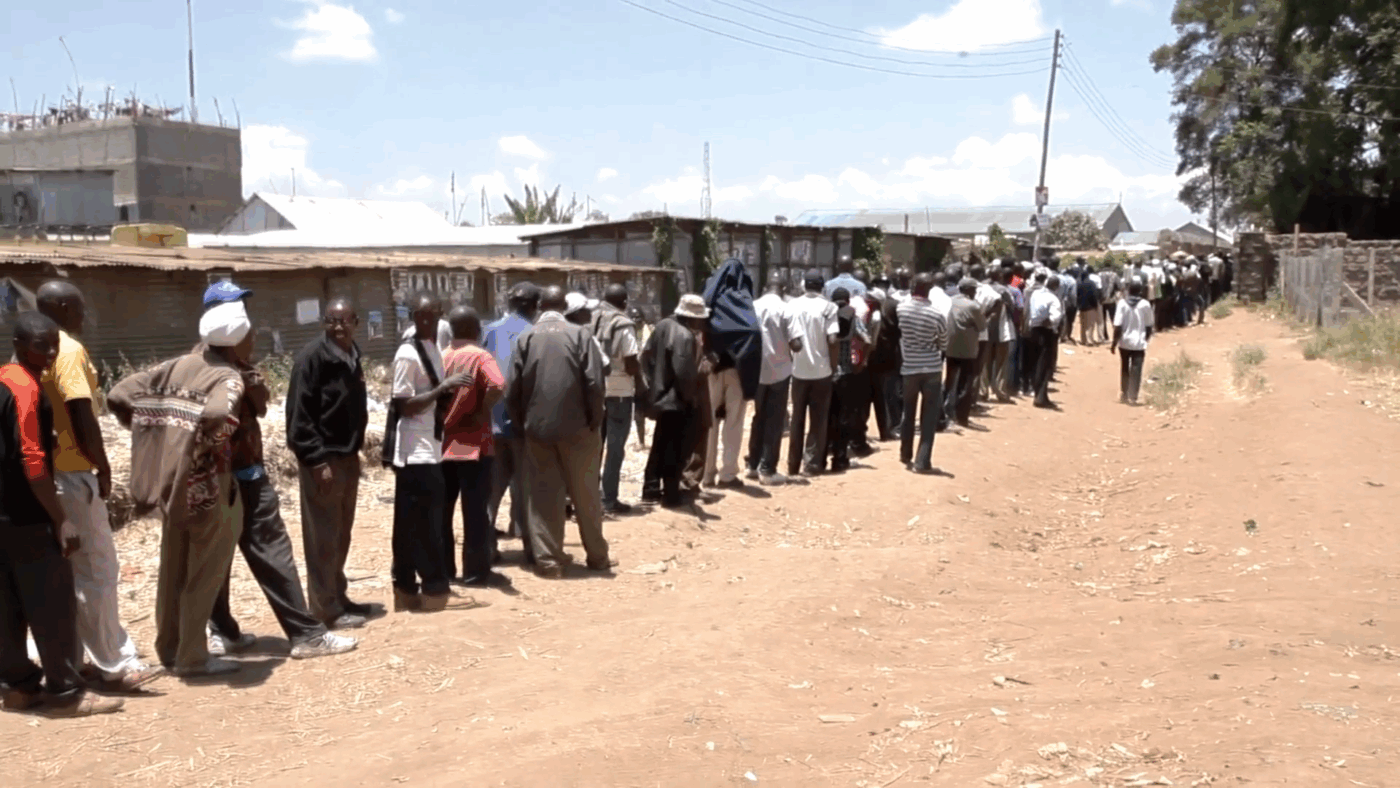
Africa as backdrop. Africa as a stage. Africa as the set upon which someone else’s life story unfolds, their moral awakening performed, their benevolence practiced. In Cassandra Herrman’s documentary When I Say Africa, we are invited to confront this enduring legacy with unflinching clarity. The film opens with a visual of the ocean, not with sweeping savannah landscapes or the familiar visual shorthand of Western charity advertisements. Instead, we watch as young people stand on a shore and film a large boat while others play on the beach. We’re transported to the next scene featuring teenagers on a bus, smiles on their faces as a voice interrupts the scenes, asking an unseen audience, “when I say Africa, what comes to mind?” The answers come in swiftly as the montage of the teenagers on the bus continues. “Poverty,” “Safari,” “Rape”. Later, we would learn that these words came from American teenagers reciting the words they associate with Africa. The words echo the vast machinery of representation that has shaped their imagination long before they could question it. Across continents, in a Kenyan classroom, African students sit and listen to these words. Their discomfort is palpable and visceral. It is a stark reminder that these narratives have consequences for real people, with real lives, and real futures.
This opening sequence immediately calls to mind Joseph Conrad’s Heart of Darkness, a book that reminds us of how Africa is understood in Western imagination and how it becomes the backdrop for exploring the Western self. In this documentary, Herrman pushes beyond Conrad’s fevered colonial imagination to engage with what Simon Gikandi illuminates in Maps of Englishness: how the colony has always served as background scenery for Western performances of goodwill, Western realizations of self, and Western displays of performative benevolence. The documentary reveals what Gikandi understood so well, that this benevolence is fundamentally rooted in adventure and in the Western subject’s need for a stage upon which to enact either their moral drama or self-discovery. It is theater, ultimately, with Africans cast as background characters in narratives they did not write and cannot control.
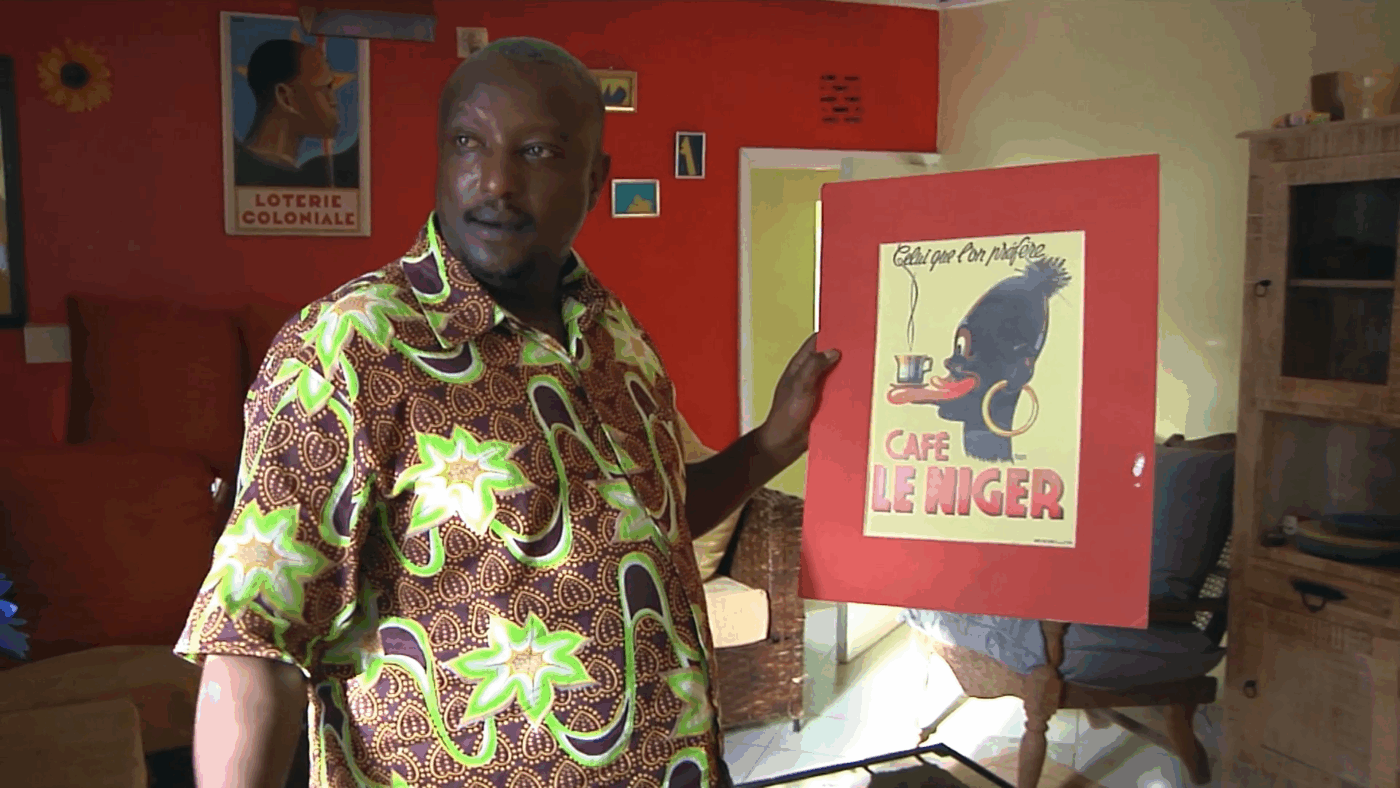
As the documentary continues, detailing the colonial history of this need to narrate a helpless and poverty-ridden Africa, the question of who tells these stories, how they tell them, and the power they weld in their telling, arises. We get a response to this question through the words of Peter DiCampo, a photographer featured in the documentary. “Since photography was invented, it was in the hands of the colonists going to the continent (Africa) and choosing how to represent them (Africans)” (45:50-46:00). This observation acknowledges the history of how Africa has been narrated and continues to be narrated in contemporary Western image-making. The technology of narrative has historically resided in Western hands. The camera, which should supposedly be an instrument of objective truth, has ironically always been a tool of empire; a technology for depicting Africa in the Western imagination as perpetually in need of saving, perpetually lacking, perpetually waiting for external intervention.
When I Say Africa also addresses a question that should trouble every Western filmmaker, documentary maker, and narrative creator: What responsibility do they owe to the people they document and whose stories they tell? The film traces how existing narratives and romanticization of Africa have persisted from colonial and missionary times into our contemporary moment, now disguised in the sophisticated language of aid, development, and humanitarian intervention. This Western benevolence, the film demonstrates, conveniently fails to acknowledge that many of the problems Africa faces, especially those that have rendered it perpetually at the mercy of Western aid, are direct results of Western colonialism, extractive economic policies, and the continued projection of an infantilized Africa that supposedly cannot exist without Western salvation.

The documentary moves deliberately from examining how these narratives were established during colonial and missionary times to revealing how they continue to persist today through the rhetoric of the West coming to help and save Africans from economic and political problems. This legacy of the missionary complex is not new, nor is it distant history. The publications, magazines, pamphlets and periodicals surrounding the 1922 Africa and the East exhibition for example, one I have examined closely in my doctoral research, were filled with rhetoric that published the narrative of an Africa in need of saving. These publications were the mass media of the time and laid the foundation for what we continue to see today on traditional media and even on social media through travel vloggers and influencers from the West. The front image of the 1922 exhibition pamphlet crystallizes this dynamic with striking clarity: a Black African man in chains, one leg bound, his hand stretching toward the reader in a gesture of supplication. He is reaching, pleading, asking for help and salvation and, ultimately, the money that attendees would deposit to the missionary work in Africa. This image was carefully designed to extract both sympathy and financial contribution, to create a sympathy-industrial complex that continues to operate to this day.
Furthermore, the documentary reveals how contemporary aid initiatives and voluntourism perpetuate this same dynamic, especially with the influence of celebrity culture (evident in the Band Aid Project). These ventures are always, when stripped of their humanitarian rhetoric, about what the West gains; whether for the Western individual seeking personal transformation and meaningful experience, the Western economy maintaining market access, or Western countries preserving geopolitical influence. Even when presented with a “humanitarian” edge or motivation, the fundamental structure remains extractive. Western filmmakers, as the documentary demonstrates, enter the field to affirm and craft stories that satisfy the expectations of funding bodies and audiences back home. As discussed between the 45th and 47th minutes, they create images that mirror Africa in ways that have already been seen and conceived by the West, rather than documenting what exists before them. They are trapped, in essence, in a loop of their own making.
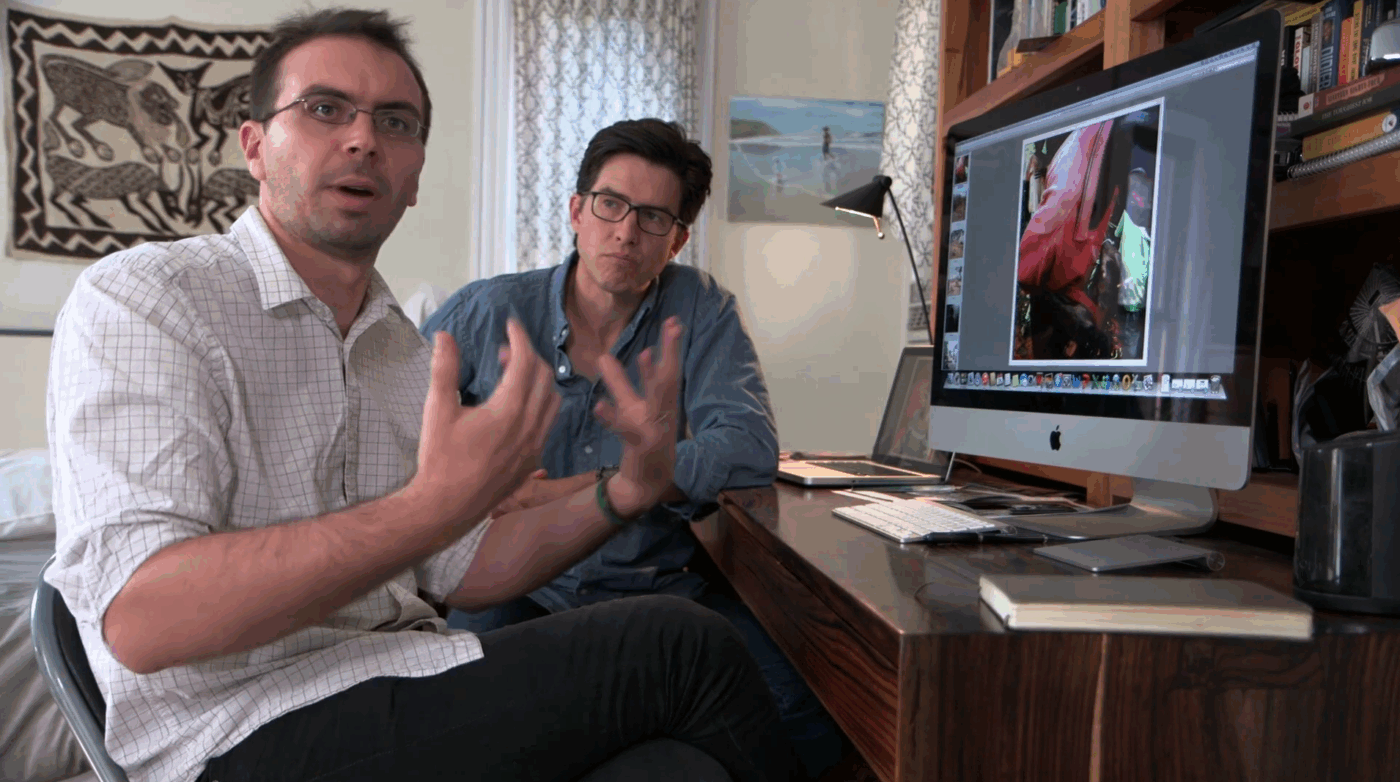
Amidst this bleak reality, the film offers a glimmer of hope through projects like “Everyday Africa,” where Africans capture images of everyday life in different African countries as a way to counter negative stereotypes. While such initiatives perform important corrective work, one wonders if, in the attempt to document and present an “every day,” the creators are not engaging in a form of romanticization that might exclude the very real struggles that constitute daily existence for many Africans. This erasure, however well-intentioned, can become its own form of violence and a kind of representational tone-deafness. A recent Nigerian influencer’s video attempting to counter negative narratives about northern Nigeria by showcasing beautiful landscapes inadvertently illustrated this danger. Days after posting, news of terrorist attacks in the region starkly confronted his selective representation. The question that rises from both examples is striking: How do we document complexity without either feeding harmful stereotypes or performing a kind of representational gaslighting that denies actual suffering?
The film eventually answers its earlier question about how and for whom we document: documentation is never neutral. It is always an exercise of power. Since the West requires a repository for its charitable feelings, a place to deposit its sympathy, Africa must continue to play its conscripted role. This dynamic reaches a powerful breaking point in the documentary through Robtel Neajai Pailey’s appearance on a British television segment critiquing Band Aid’s song for Liberia during the Ebola crisis. Watching Pailey, a Liberian author and activist, I observed her careful stance, controlled breathing, and visible effort to maintain professionalism in the face of epic media gaslighting. Her reaction mirrors the displeasure of the Kenyan schoolboy hearing American children reduce his continent to “poverty” and “war.” The British journalists proceed to lecture Pailey about how the Band Aid lyrics have been changed, as though she should be grateful for these crumbs of consideration. Her response cuts through the pretense: African musicians composed their own song, “Africa Stop Ebola,” which focuses on addressing the actual problem rather than presenting Africans as perpetually pitiable subjects waiting for rescue. Then she delivers the line that should echo in every Western newsroom: “My country doesn’t need saving.” That the Band Aid song returned yet again in 2024 reveals how little has fundamentally changed. The missionary complex, as the documentary demonstrates, cannot examine itself.
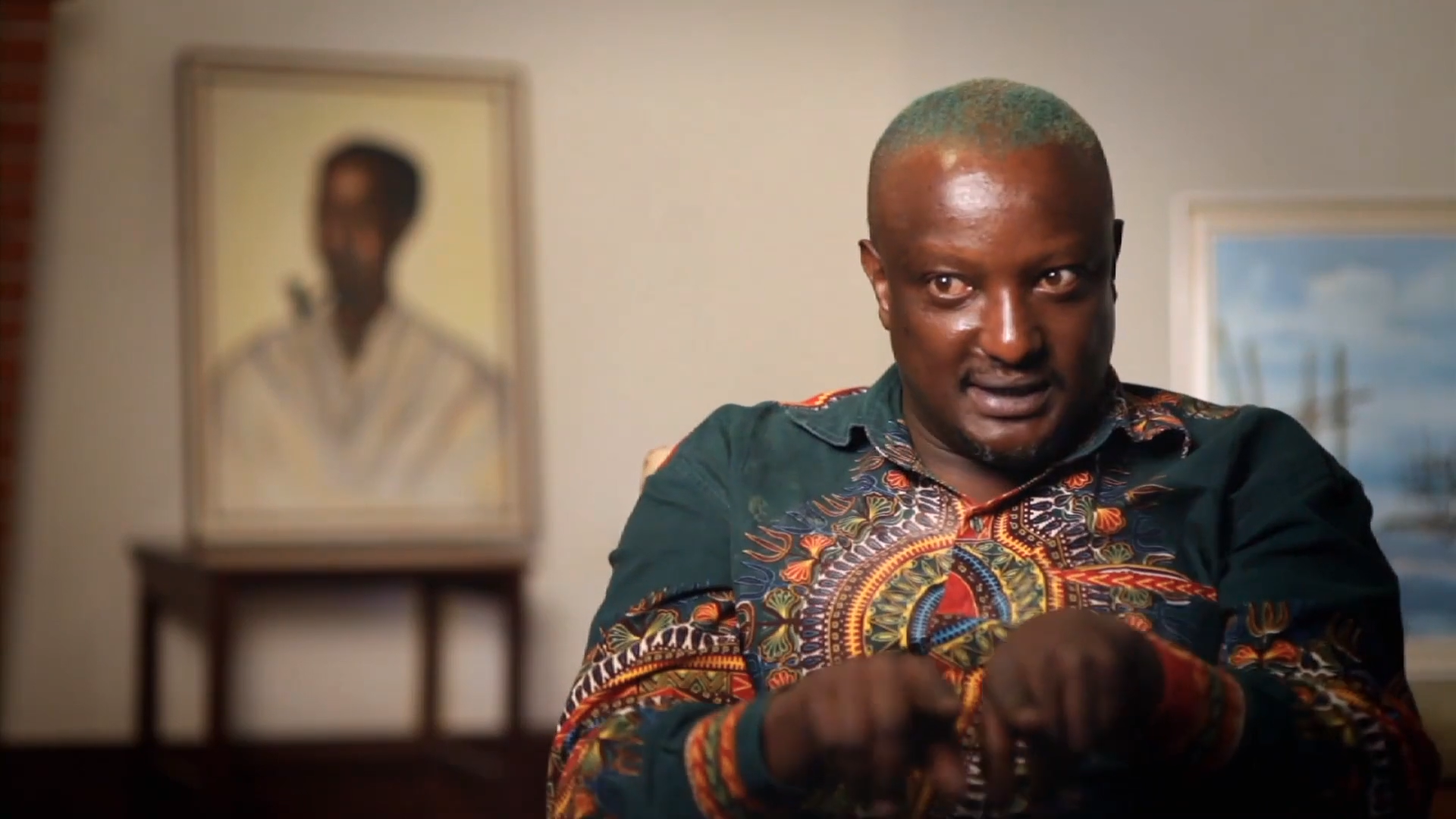
Pailey’s refusal to accept Western saviorism has deep historical roots which are explored by Kenyan writer Binyavanga Wainaina, throughout the documentary story. Wainana’s personal and family story provides crucial context for understanding the direct effects of Western policies on everyday Africans. As a secondary school student in Kenya in 1984, Wainaina heard the first Band Aid song “Do They Know It’s Christmas?” without fully grasping its propaganda function or how it fostered negative images of an entire continent. Later in the film, he tells us that, Western benevolence becomes “a way for white people to forgive themselves for what white people did.” It is absolution theater, with Africans as unwilling extras in someone else’s redemption narrative. Throughout the documentary, the narrator’s voice moves in and out of the frame, acknowledging the filmmaker’s own complicity and inviting rigorous self-examination. Herrman doesn’t position herself outside the system she critiques but rather invites filmmakers like herself to interrogate their own practices, their own participation in these economies of representation.
These layered examples reveal why When I Say Africa is essential viewing. It refuses easy resolutions and interrogates the entire apparatus of Western representation, revealing that contemporary aid, voluntourism, and humanitarian filmmaking are continuations of the colonial and missionary project that started centuries before. From colonial and missionary exhibitions to Band Aid songs and contemporary documentaries, the script remains remarkably consistent. The fundamental power relations of who looks and who is looked at, who speaks and who is spoken for, remain stubbornly intact. Africa is the problem; the West is the solution. Africans are grateful recipients of Western largesse. Nothing has changed.
After exposing this continuity of exploitation, the film closes with its most radical gesture. It presents a montage of images by African photographers from the continent itself: from Seydou Keïta and Arturo Bibang, to Fati Abubakar. The images show Africans in different postures as they express moments of beauty, struggle, resistance, and thriving. These are images created for African self-expression, self-representation, and self-understanding. Seeing this reel reminds me powerfully of the work that earlier African photographers like Jonathan Adagogo Green (1873–1905), born in Bonny Kingdom in what is now Nigeria, had done to preserve African cultures and, humanize Africans in ways that nineteenth-century Western photographers and missionaries actively refused to do. Green understood what these contemporary African photographers understand: that the camera can be a tool of preservation and dignity rather than a tool of exploitation and extraction. By ending with this reel of African-made images, the documentary performs what it has been arguing throughout. The solution to harmful Western narratives about Africa is not better Western narratives, but the amplification and centering of African voices, African perspectives, African image-making practices.
___
Works Cited
Conrad, Joseph. Heart of Darkness. 1899. Edited by Paul B. Armstrong, 5th ed., W. W. Norton
& Company, 2016.
Gikandi, Simon. Maps of Englishness: Writing Identity in the Culture of Colonialism. Columbia
University Press, 1996.
Herrman, Cassandra. When I Say Africa. Directed by Cassandra Herrman, produced by
Cassandra Herrman, Linda Peckham, and Kathryn Mathers, 2025. Vimeo.
***
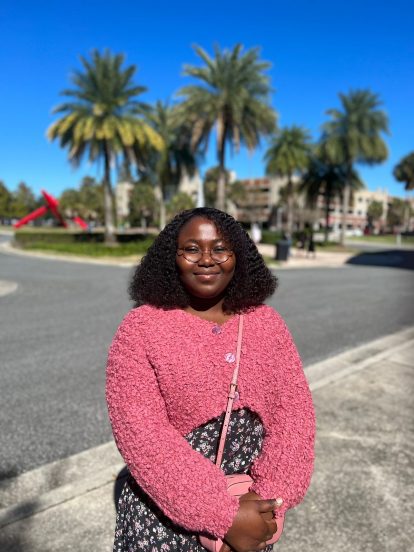
Dr. Mosúnmọ́lá Adéòjó (Prof Mossie) is a scholar, teacher, and reader, whose writings explore the intersections of culture, memory, and identity in African and diasporic contexts. She holds a Ph.D. in English from the University of Florida, with specialization in Global Anglophone Literatures, African Cultural Studies, and Digital Humanities. She also shares book reviews and recommendations via @readwithmossiestorch on Instagram