Badagry and Its Botanical Revolutions
Photography by Gabriel Whenayọn Louis
If you grew up around Badagry, you likely learned to read the coastline like a timeline chronicled in familiar plants—along, of course, with its rich aquatic life. And if you are familiar enough with its affairs, you would perhaps agree that the vegetation of this historic port has witnessed several remarkable transformations with time. In this photo-essay, as an environmental historian and nature lover, working together with a documentary photographer, I present to you the main revolutionary changes to the floral profile of Badagry’s Atlantic and lagoon shore that I have been interested in lately.
Badagry experienced its foremost botanical shift with the arrival of the coconut palm on its shores. Historically, the coconut is not indigenous to the Nigerian area or even the African continent. Cocos nucifera, known locally as Agunkẹ or Àgbọn, was introduced into the West African coast from the Indian subcontinent by Portuguese traders and missionaries in the early 16th century, some 500 years ago. Once it began to take root and tower above the native plants along the seaboard, the coconut palm completely reshaped Badagry’s shore economy and ecology, giving communities a lucrative cash crop, essential food and drink, a sturdy building material as well as an annual cultural festival. This prized “Tree of Life,” whose every part—from its husk, coir, shell, and kernel, to its water, leaves, trunk and sap—commands significant value, turned long stretches of sandy beaches into the coconut groves everyone still associates with the town today.
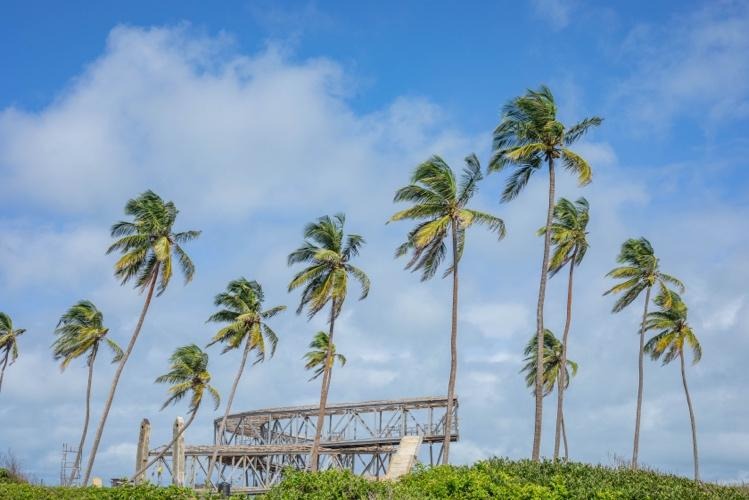
Coconut groves at Gberefu beach
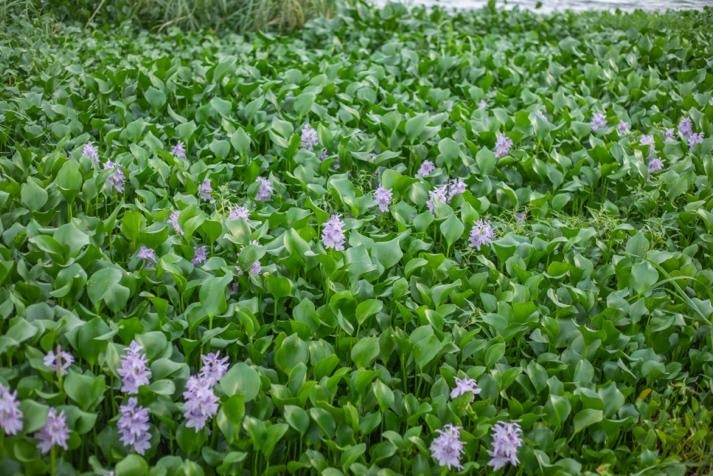
Another watershed in Badagry’s littoral flora came centuries later, swaying defiantly across the calm waters: the water hyacinth. Known as Gbéborùn [depicting an unwelcomed busybody] and Togble [literally town-wrecker] in the local Yorùbá and Gun languages, Pontederia crassipes drifted into the Badagry lagoon system in the 1970s and 1980s from inland waterways to the northwest. Historical photographic evidence from the landscape and aerial imageries of the Badagry waterfront shot by British expatriate officer and documentarian E. H. Duckworth lends credence to the fact that the water hyacinth was absent in the area until after the mid-twentieth century. The free-floating freshwater weed only took over large swathes of the channels later, buoyed on by its spongy, air-filled stalks. Within just a few seasons, this bright-green invasive plant rapidly began to choke boat routes, disrupt fishing activities, and forced locals to rethink how they interacted with the lagoon. The water hyacinth is a rapid coloniser whose rosette forms a dense mat that blocks out sunlight and depletes oxygen for every aquatic life beneath it. The plant also clogs fishing nets and boat engines, making waterway and shoreline access difficult. A similar scenario was captured by Duckworth in his 1951 article on the Aiyetoro seashore community published in volume 36 of the now-defunct Nigeria magazine. He documented how hordes of water lettuce (Ojú Oró or Pistia stratiotes) blocked significant sections of Mahin Creek during his visit to Ilajẹ-land then under the colonial Ondo Province (see images below). That’s not all, water hyacinths also provide a breeding ground for mosquitoes and snails that transmit different kinds of diseases including elephantiasis, schistosomiasis, and paragonimiasis. However, this problematic weed also carries some potentials as it can be repurposed into compost, biogas and different kinds of handcrafts.
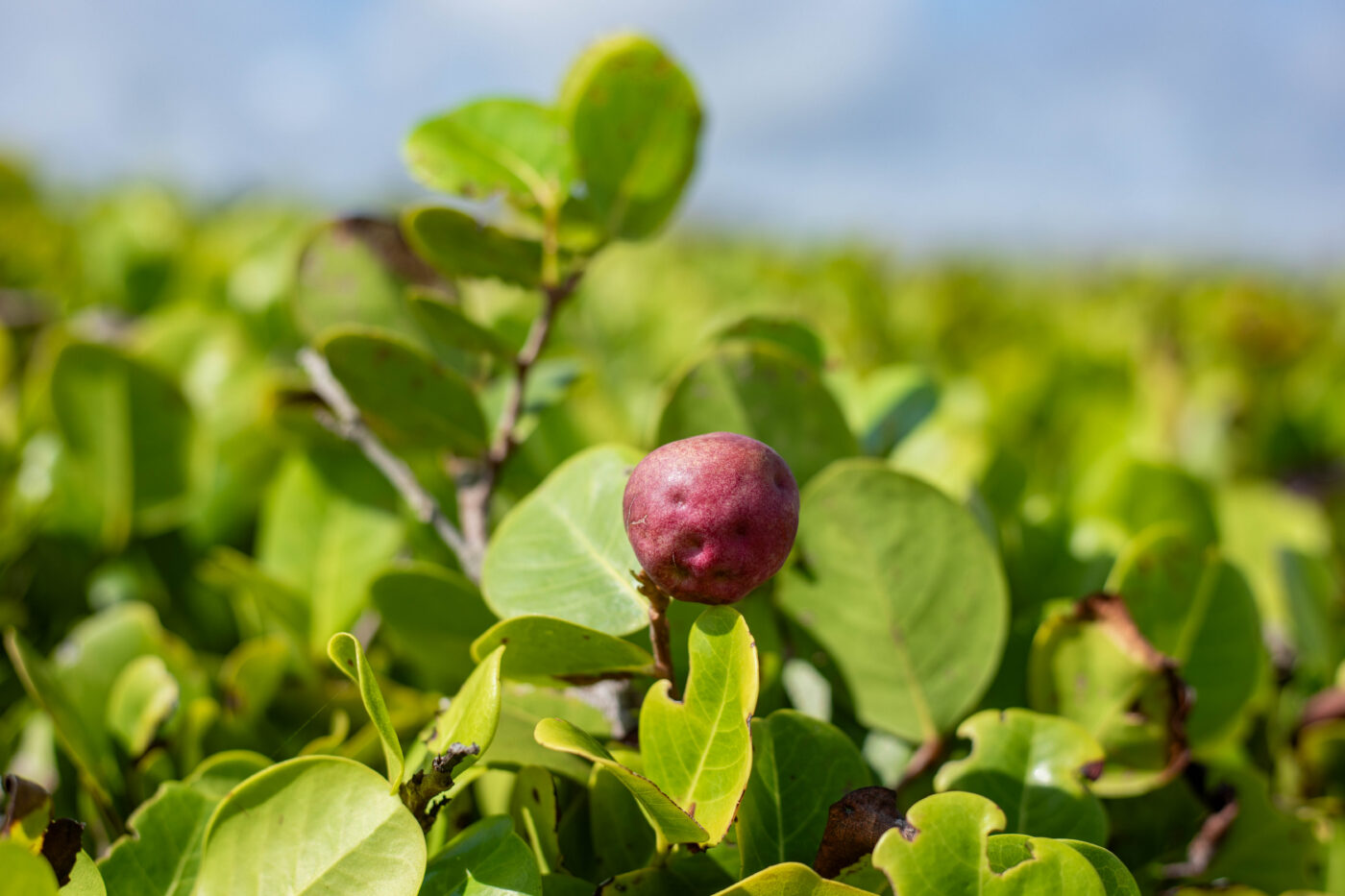
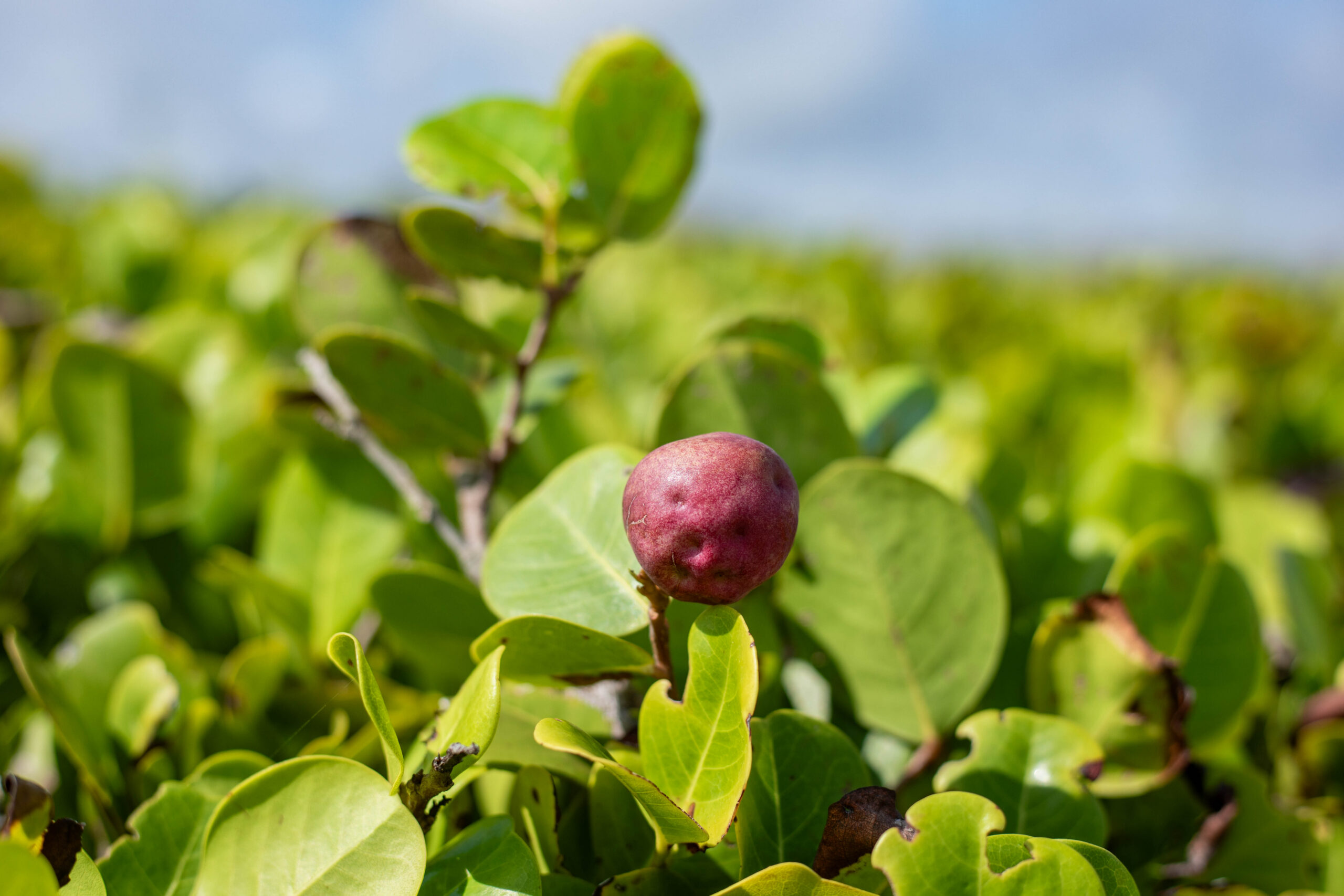
Badagry’s plant ecosystem experienced yet another turning point with the colonisation of Gbẹrẹfu and other coastal communities by the Cocoplum (Chrysobalanus icaco). Known locally in Gun as Ahọkun, this shrub, which is native to the sea beaches of West Africa and other tropical areas, has in recent years escaped cultivation to become a problematic invasive. Over the past couple of decades, the cocoplum has been rapidly advancing across the coast, competing with the coconut palm for soil nutrients, and choking up other plant and animal species in the area. While much about its spiralling takeover of the beachfront remains unknown, I would argue that the cocoplum was almost completely unknown to me as a kid growing up in the town. The Duckworth Photograph Collection also supports this position; no cocoplum bushes can be observed in the aerial images from the collection. Lately, however, every time I go to unwind at Gbẹrẹfu Beach or to reconnect with my extended families there, I see extensive, dense bushes of this wild plant spread across the area. This ongoing challenge calls for urgent research and intervention!
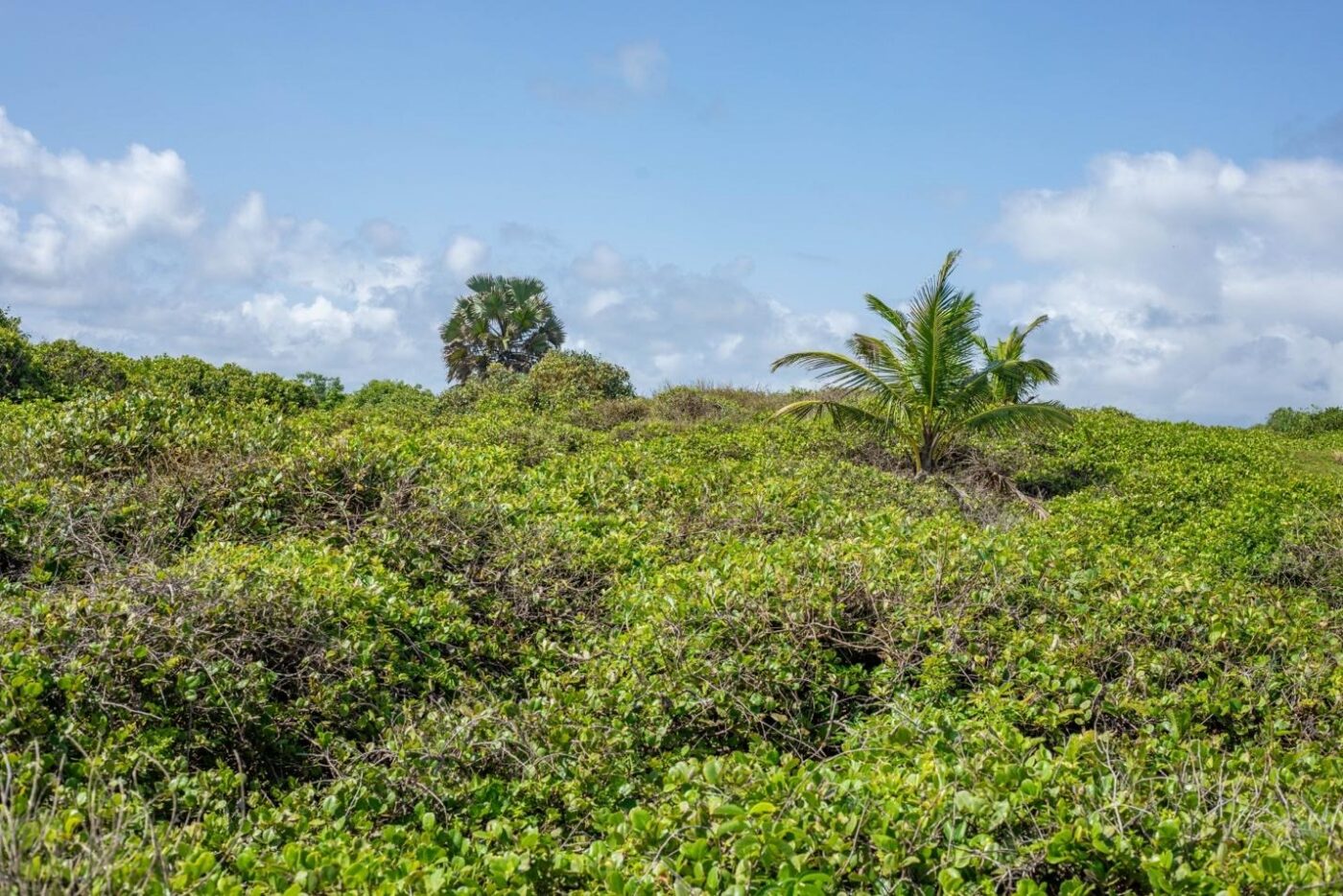
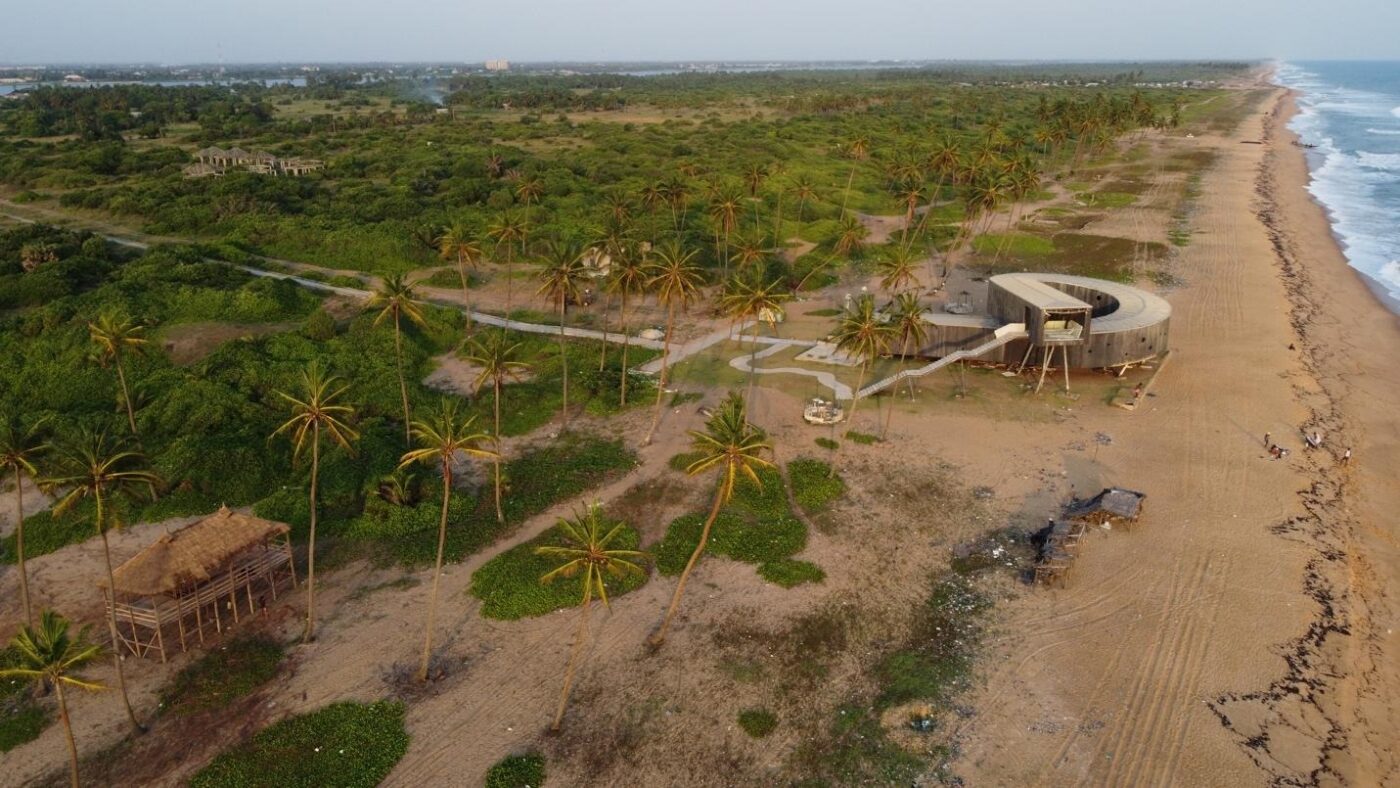
Aerial view of vast cocoplum sprawl along the Badagry shoreline (Dec. 2021)
Today, we’re at the cusp of a fresh botanical revolution in Badagry as Adùn Resorts, an innovative ecotourism project, plans to introduce managed bamboo groves into a section of Badagry’s littoral landscape. Done carefully, the “Green Steel” could be the first intentional, restorative planting at scale here with its high tensile, fast-growing, self-regenerating, and carbon-storing potentials. While it affords enchanting boardwalks and birding trails for tourists and visitors seeking relaxation, serenity and wellness in nature, this high-performance grass also has invaluable potentials in construction and craft production. If a Bamboo Grove can thrive within the complex of the Oluṣẹgun Obasanjo Presidential Library (OOPL), there is no reason to think that a similar project in Badagry would fail.
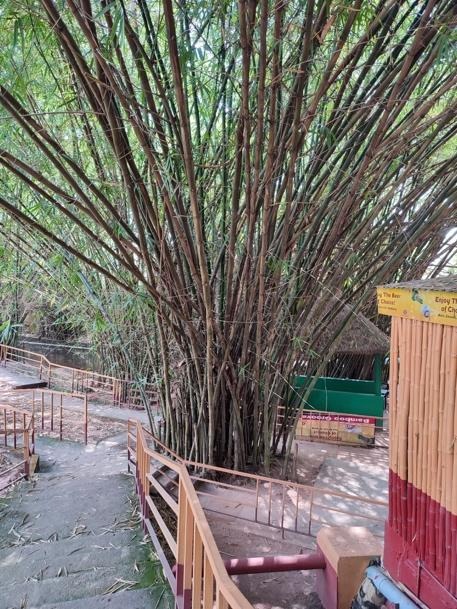
Bamboo Grove at OOPL (Nov. 2021)
To sum up, this is a portrayal of a coastal town and three critical plants in its environmental history. First, it was the coconut that built a livelihood; then came the water hyacinth and cocoplum that are presently threatening its sustenance. While much effort is now urgently needed to keep these invasives in check in many parts of the West African coast, we cannot wait to see what would become of Adùn Resorts and its bamboo initiative. One can only hope that the project becomes a reality soon and that it endures for many generations to come! And may Badagry’s tourism and littoral ecosystem be better for it.
Images from the E. H. Duckworth Photograph Collection held in the Digital Collection of the Herskovits Library of African Studies at Northwestern University in Evanston, Illinois, USA:
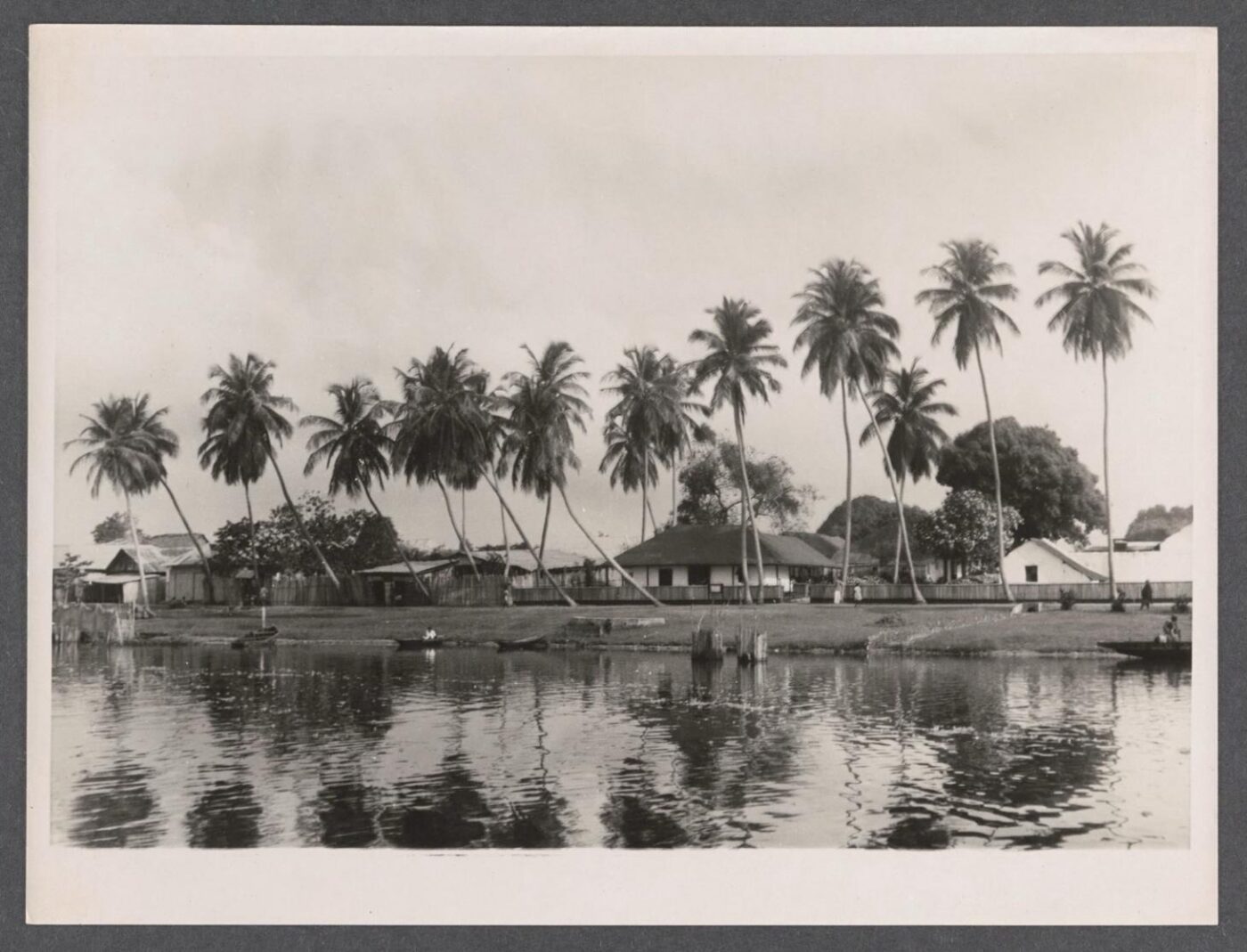
Landscape shot of the Badagry lagoon front at Ganho area.
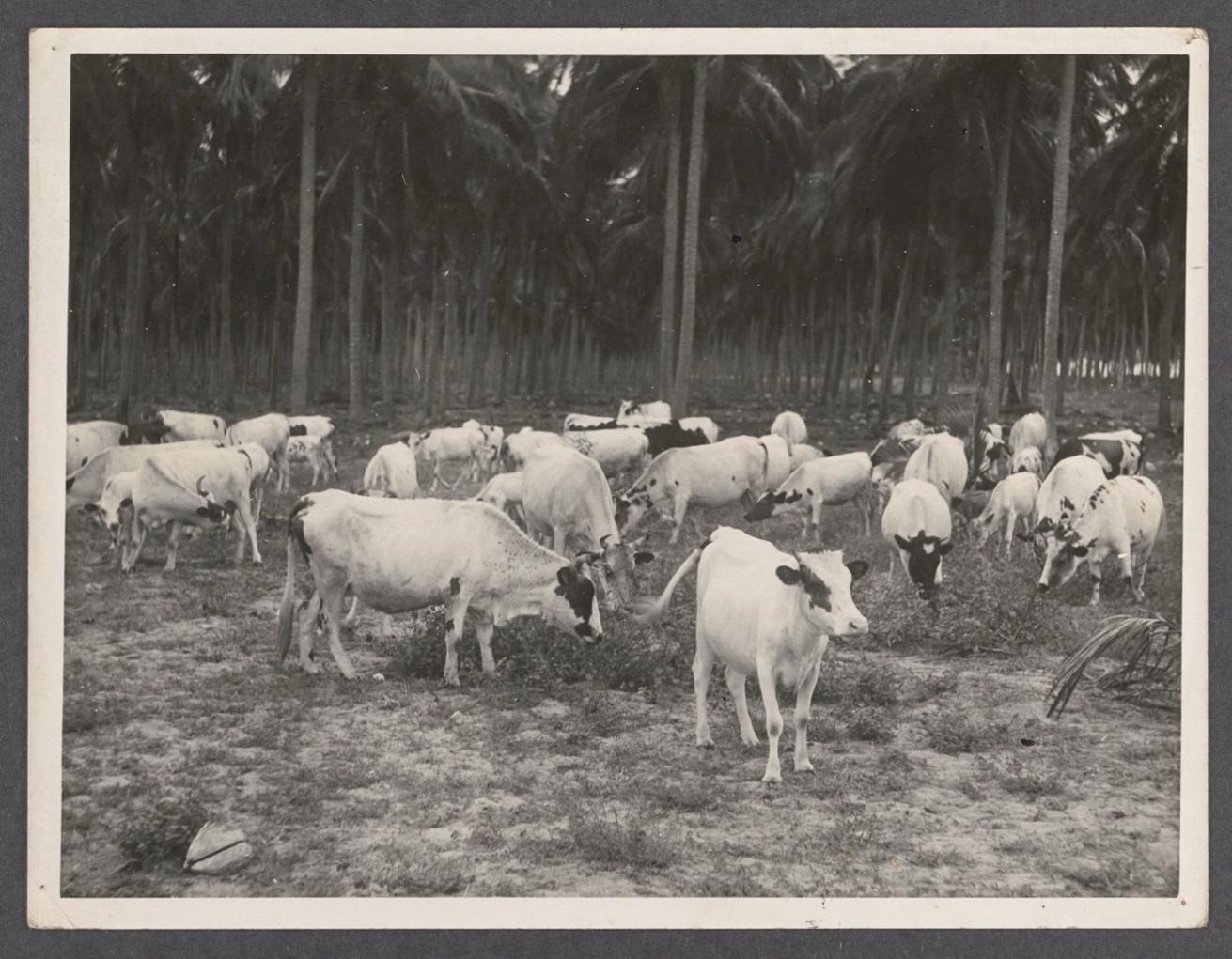
Coconut Plantation and Cattle on the Catholic Mission Farm at Topo beachfront.
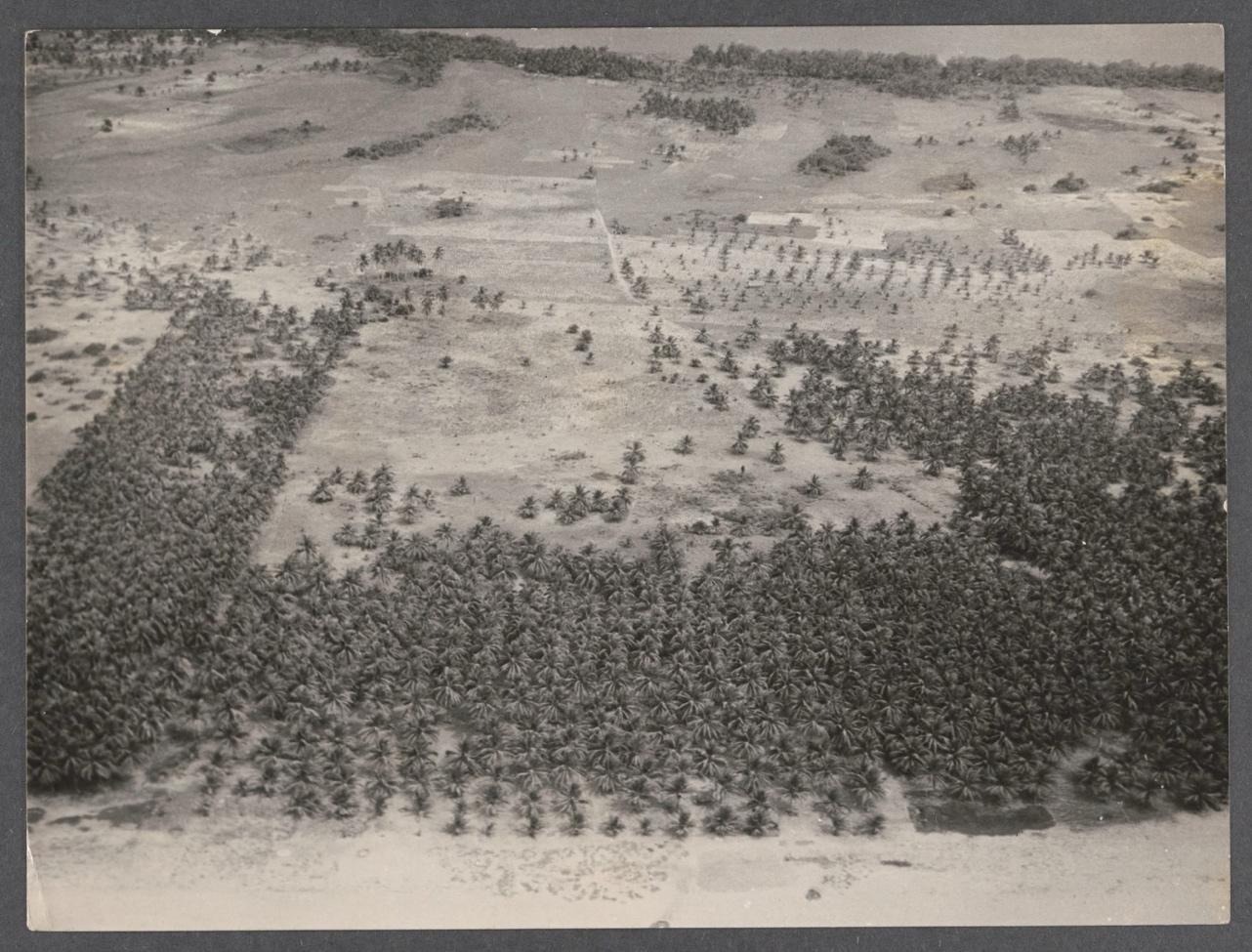
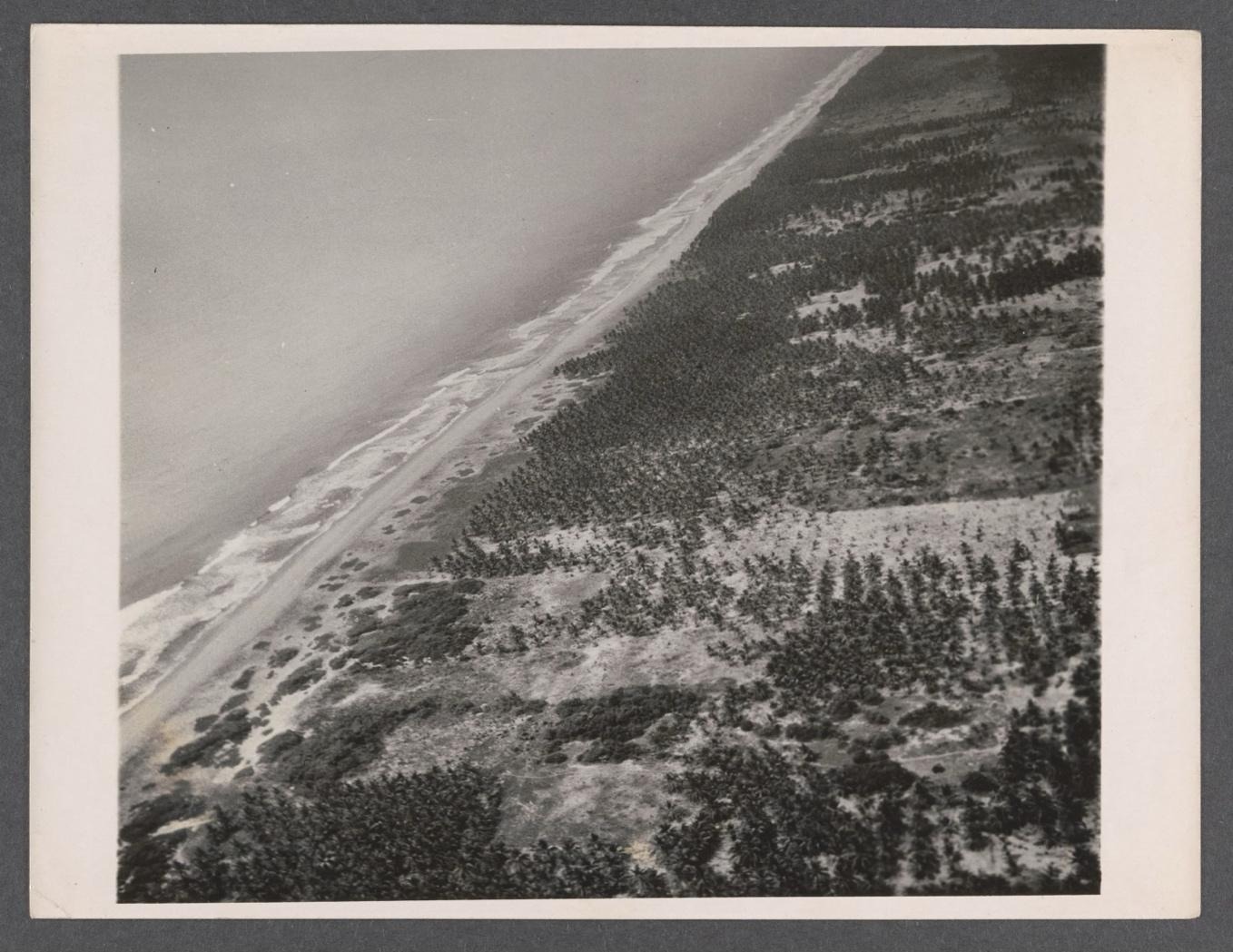
Aerial imageries of coconut plantations at Gberefu Beach.
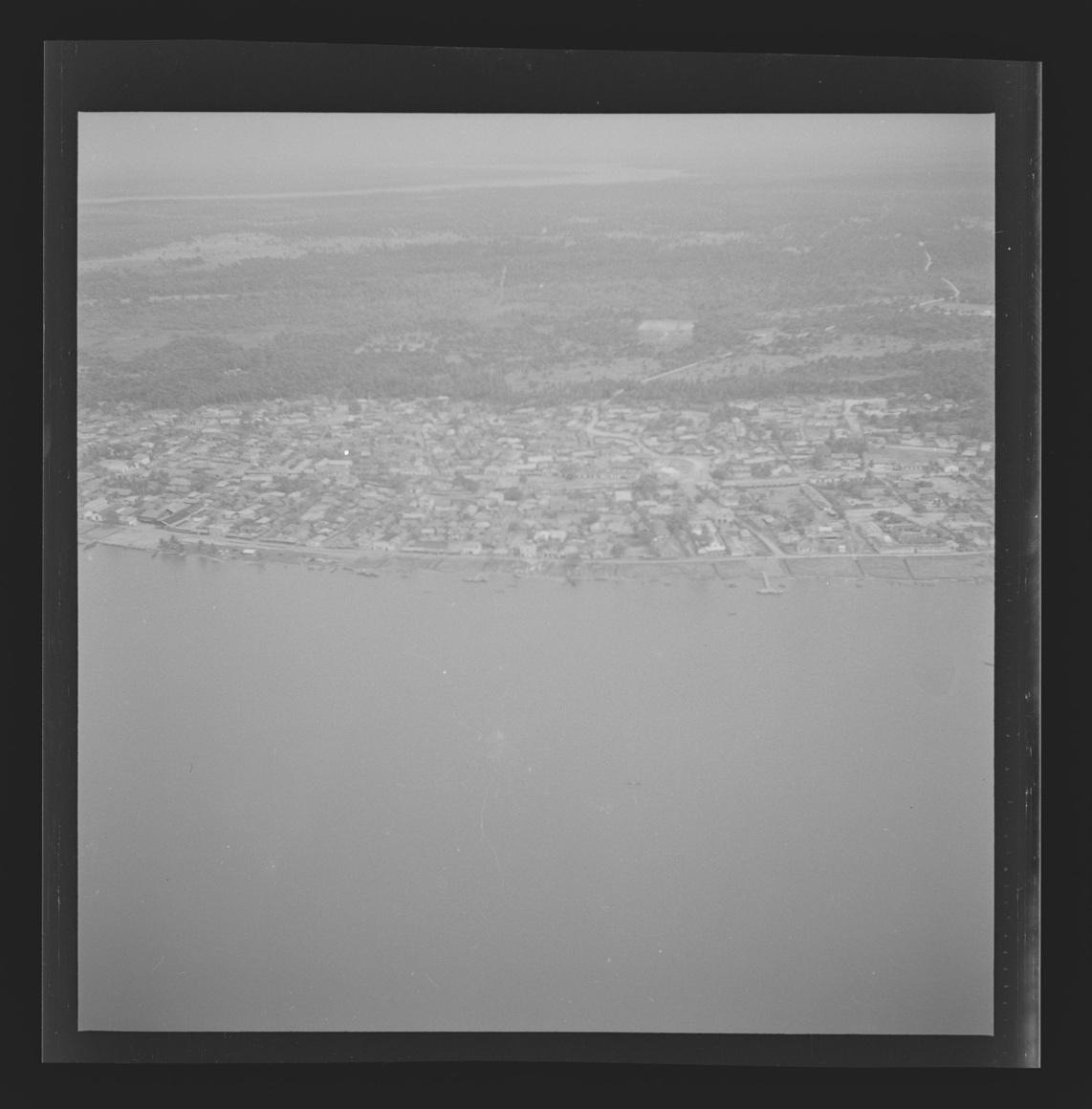
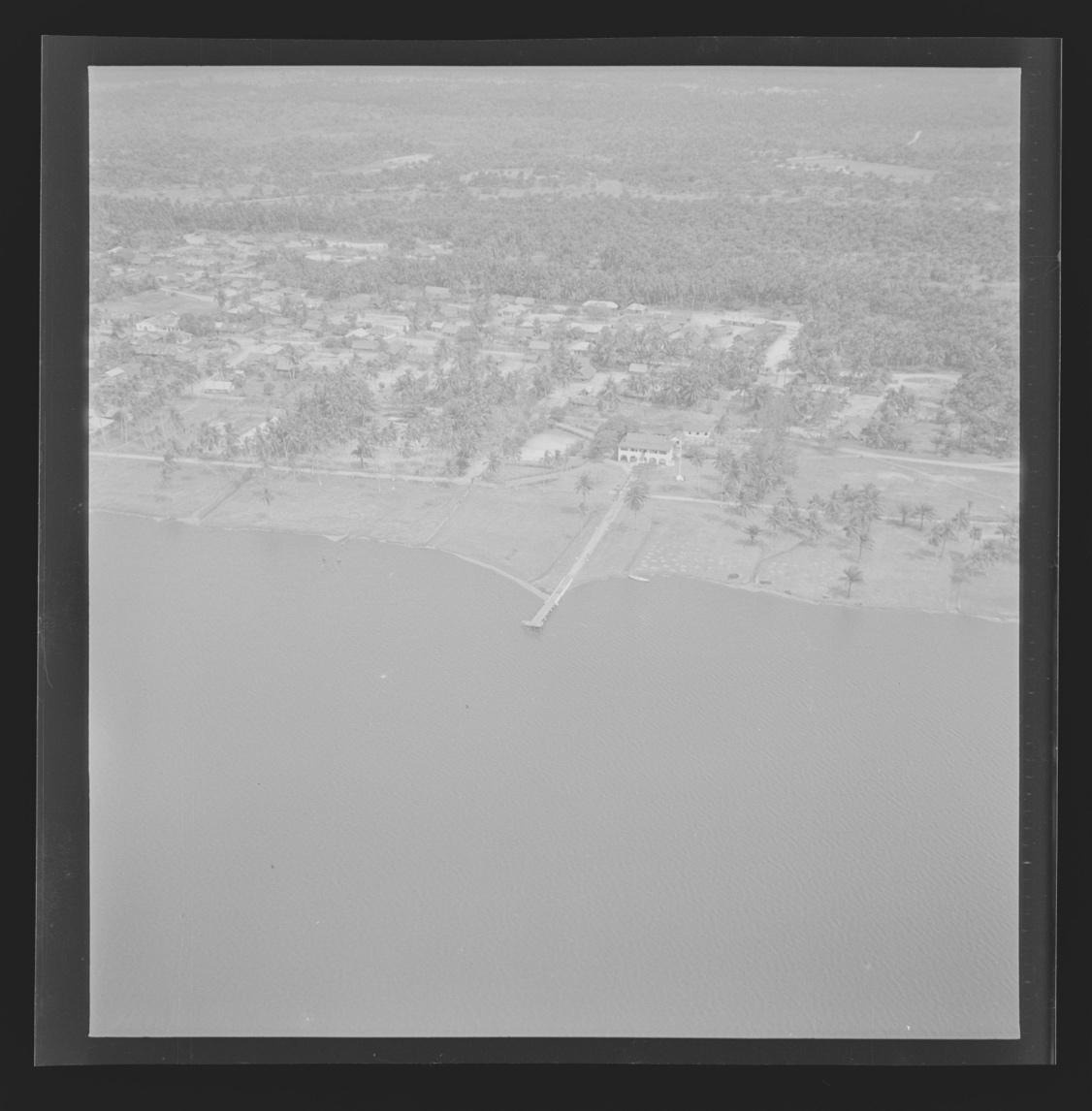
Negatives of aerial shots over Badagry lagoon and town, notice the Colonial District Officer’s Residence in the middle of the shot.
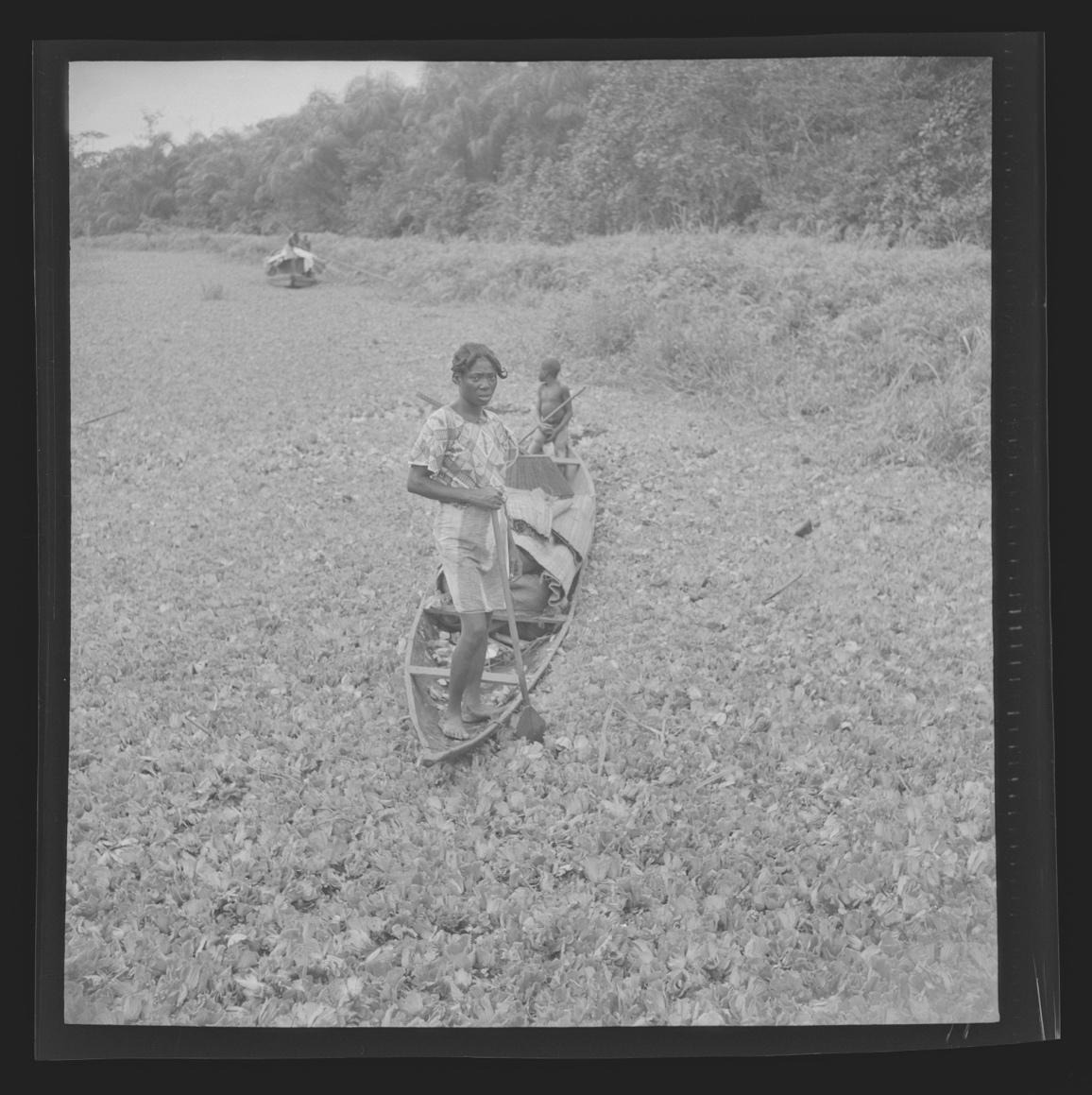
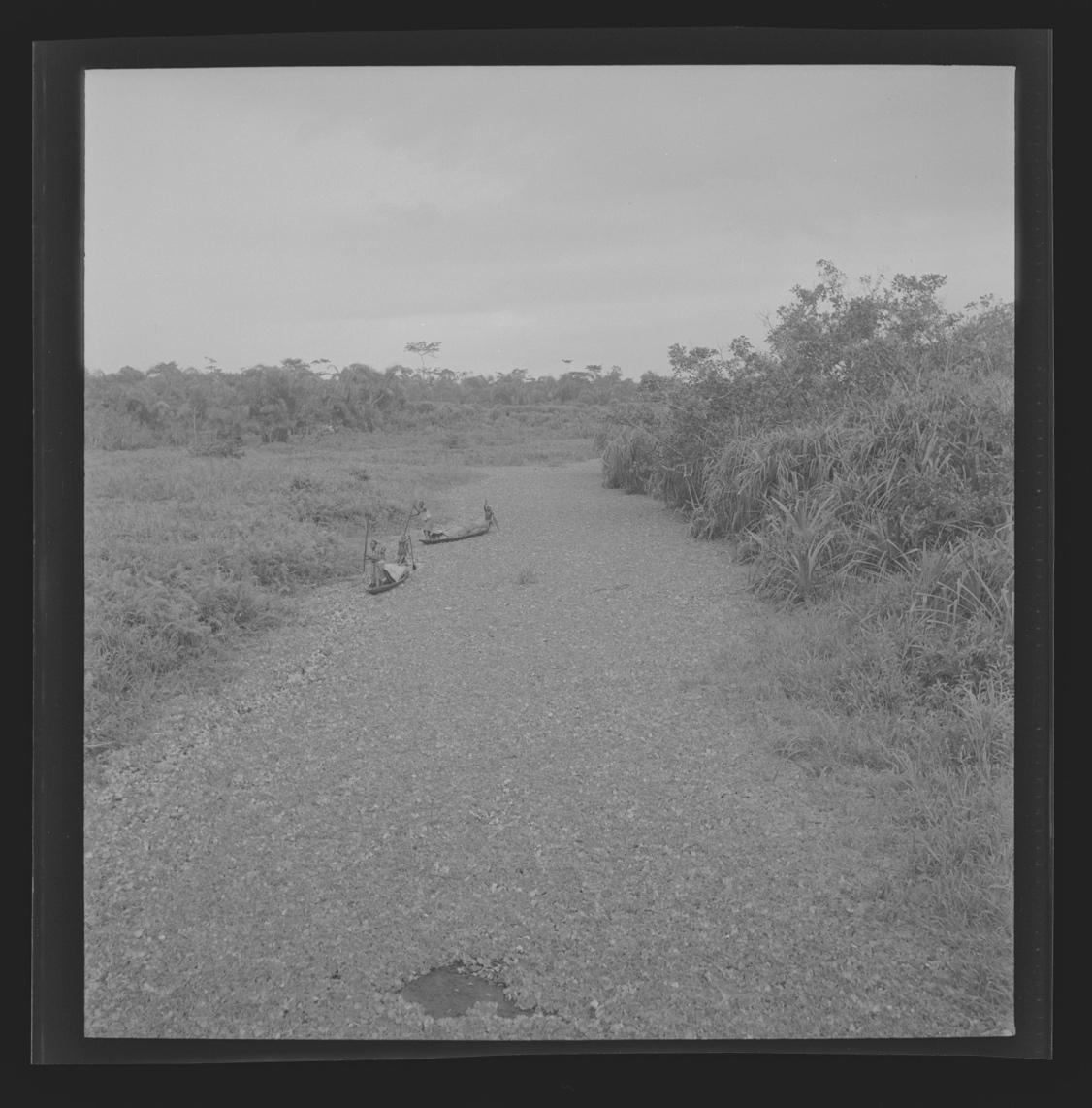
The Mahin Creek in Ondo State choked up by water lettuce.
Ṣeun Sedẹ Williams is a One Health historian and multispecies scholar based in Dublin.
Gabriel Whenayọn Louis is a Badagry-based documentarian and founder of the Badagry International Photo Festival.