
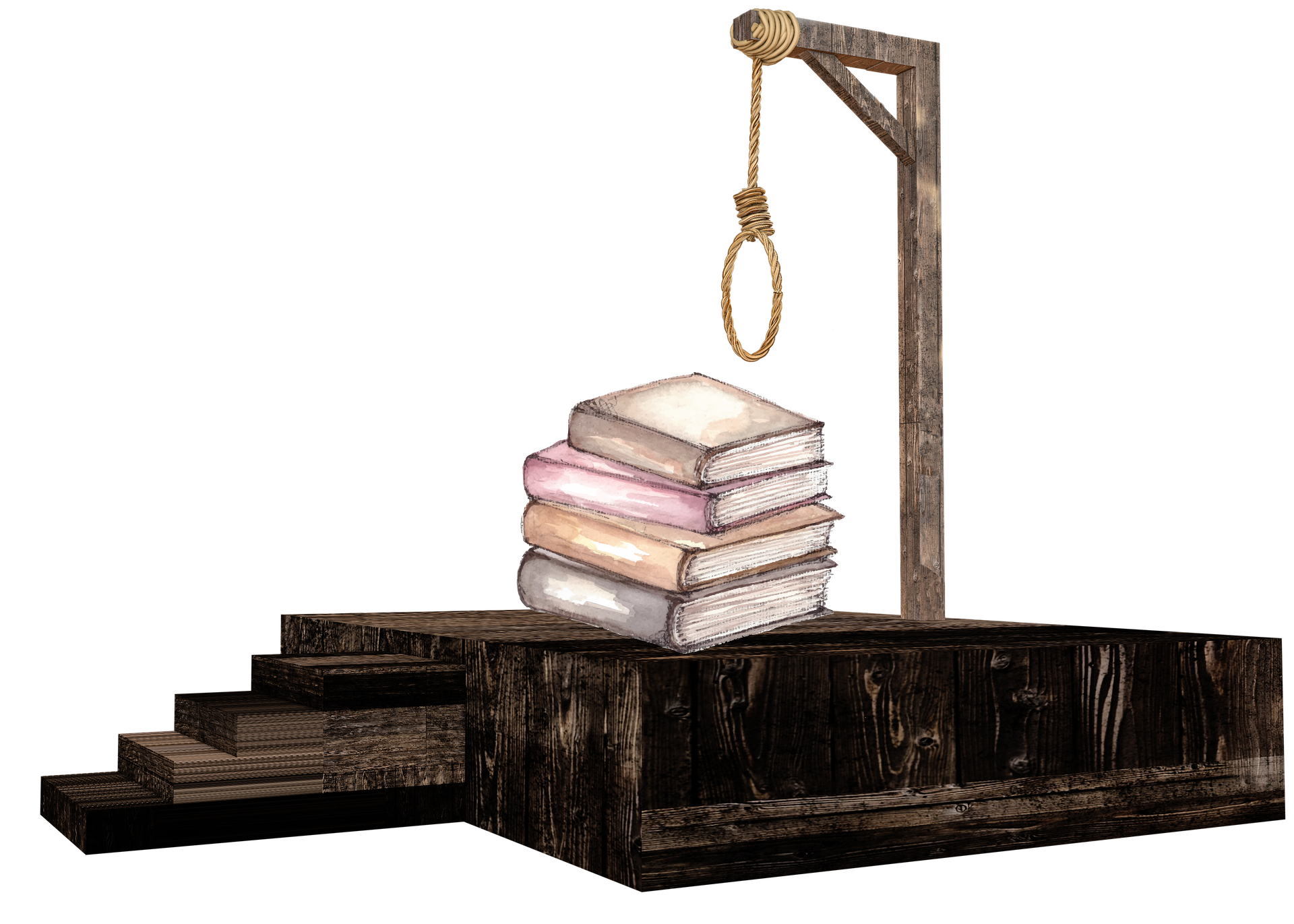
Nigerian Literature is Dead (Again)
When Oris Aigbokhaevbolo declared Nigerian literature dead, he did not do so casually. He was not lamenting a temporary lull or the disappearance of a few magazines. He was naming what he saw as a fundamental failure of formation. There was, in his account, no stable literary life to grow into. Writing appeared intensely, briefly, and then dissolved. Talent did not mature into practice. Passion did not harden into a profession. Literature flickered and gave way to other forms of survival. That declaration when he made it at the inception of his newly formed Efiko Magazine, canonized what Ikhide Ikheloa had been singing for years on his Facebook posts. It did not ask whether Nigerian literature was struggling. It asked whether it had ever truly lived in a way that could sustain itself. It was a claim that should have warranted other kinds of treatises; what it gave birth to instead was a slew of obituaries.
In these so-called obituaries, the declaration arrives ritualistically, almost on schedule. A critic writes it. A poet echoes it. A reader repeats it in a Facebook or Twitter rant. The tone shifts but the gesture remains the same. There is always mourning. For magazines that no longer publish. For reading spaces that once existed and now survive only as anecdotes. For an earlier seriousness that has supposedly been misplaced. At other times, the mourning curdles into derision. Writers are accused of aesthetic laziness, of flattening language, of not knowing what to do with a semicolon, as though punctuation were proof of lineage. Sometimes the argument is demographic. The literature, we are told, no longer speaks to the people it claims to represent. Its audience has moved on. They are busy. They are online. They are uninterested. The work circulates among a small class of readers who read one another and mistake that loop for a public. And sometimes the death is pronounced structurally. There are no institutions to support the work. No publishers with patience. No criticism that can sustain disagreement. No archives sturdy enough to remember anything for long. The ecosystem, starved of scaffolding, is said to collapse under its own weight.
Many people have accused me of participating in this tradition. I don’t entirely resist the charge. I have written about infrastructural fragility, about prizes that reward arrival more than duration, about the ease with which celebration substitutes for continuity. But I have never declared the literature dead. Because death requires forgetting. And forgetting has not happened. Not yet. What has happened instead is something more complicated. The literature has become over-visible. It is everywhere and nowhere at once. It circulates widely, but thinly. It is talked about more than it is held. A handful of writers are elevated into a global view, their work standing in for an entire ecosystem that remains precarious beneath them. Attention gathers. Acclaim flickers. Reach recedes. A perfect example of over visibility was the recent hullaballoo over the award of the Nigerian Prize for Literature to Oyin Olugbile’s Sanya. I have written about this elsewhere, but the gist is that some critics imagined that Chigozie Obioma, because of his stature having been shortlisted for the Man Booker prize twice, was bigger than the richest prize for literature on the African continent. A prize that came with a $100,000 prize money.
Over the years, this condition has been mistaken for decline. In his essay responding to Oris Aigbokhaevbolo, Michael Chiedoziem Chukwudera argues that Nigerian Literature has drifted from the ideological and cultural anchors that once shaped it, seduced by Western publishing circuits and external validation. What is being mourned here is not just the loss of institutions like Heinemann, but the disappearance of a shared center of gravity. When Chukwudera invokes “ideological anchors,” is he yearning for the clear anti-colonial thrust of Achebe, or the nation-building mandate of the early Soyinka? If so, his critique may be less about the literature’s death and more about its refusal to be governed by a single, overriding project. Okwuasaba David makes a related charge in his essay titled The Forgotten Art. For him, contemporary Nigerian literature has lost relevance. It no longer speaks urgently to local social realities. Cosmopolitan aesthetics become evidence of distance, even betrayal. Literature, untethered from struggle, begins to look ornamental. For me both of these critics are not entirely wrong, but they are not right either. To say contemporary writing in Nigeria isn’t responding to the social realities is to admit your own ignorance about the writing the country consistently produces. Nigerian poets have consistently spoken back to the country. To read Adedayo Agarau or Precious Arinze is to be confronted with the social realities of Nigeria. Even Nigerian fiction which has been the weeping boy for these critics in recent years hasn’t shied from confronting the country’s problems. Easy examples of this can be found in recent releases by Samuel Kolawole and Ayotola Tehingbola.
These arguments recur because the conditions that provoke them recur. Kanyinsola Olorunnisola in his essay Nigerian Literature and the Era of the Nomadists notes that Nigerian literature has “died again” at precisely those moments when writers become more mobile, more digitally networked, less dependent on Lagos or any single site of legitimacy. What is read as abandonment is often adaptation. The work does not stop. It simply relocates. Kéchi Nnomu pushes this further in her essay Who is Afraid of Nigerian Literature. Writing about Nigerian literature’s post-internet life, she shows how the culture has long survived without solidity. Through Facebook posts that functioned as criticism. Through arguments that substituted for institutions. Through festivals and readings that condensed the community briefly before dispersing it again. The literature lived intensely, even when it could not last. The problem with over-visibility is not that it lies. It tells the truth, just not the whole truth. Nigerian literature is visible because something is happening. People are writing. Work is being produced at a pace that would have been unimaginable a generation ago. The field has widened. New voices have entered. The old gatekeepers no longer decide alone. That much is undeniable. Even the loudest obituaries concede this, if reluctantly. But visibility has become the metric by which life itself is measured. This is where the confusion hardens. What is seen is mistaken for what is sustained. What circulates is mistaken for what is read. What receives attention is mistaken for what reaches.
Many of us live inside this contradiction. We sit in MFA workshops and PhD seminars in the US, Canada and the UK, reading and writing Nigerian literature far from where it is presumed to matter most. We are trained to speak fluently about craft, theory, and lineage. We learn how to position our work, how to make it legible to institutions that reward legibility. At the same time, we are told, sometimes by the same people, that the literature has drifted, that it no longer speaks to those it claims to represent. This doubleness produces noise. Everyone is talking. Few are listening. Essays proliferate. Panels multiply. Hot takes circulate faster than books. The literature begins to feel crowded, even as the number of people who can hold it steadily remains small. Over-visibility does not thin the work directly; it thickens the air around it until it becomes difficult to breathe.
Some critics mistake this atmosphere for decay. When Michael Chiedoziem Chukwudera worries about ideological drift, or when Okwuasaba David insists on relevance as the measure of seriousness, what they are responding to is not emptiness but excess. Too many signals. Too few anchors. Their unease is not unfounded. But it misnames the problem. The literature has not lost purpose. It has lost reach. Reach is slower than visibility. It is harder to quantify. It does not announce itself with prizes or headlines. Reach happens when a book circulates beyond the moment of its acclaim, when it enters classrooms without being curated as representative. When it is argued over. Misread. Resisted. Returned to. Reach depends on readers, on critics who stay, on institutions that do not collapse after one season of enthusiasm.
Visibility skips these steps. It leaps. This is why over-visibility feels like life while functioning like exhaustion. A few writers come to stand in for many. Their success is overdetermined, asked to do symbolic work no single body of writing should bear. The rest of the field recedes, not because they are weak, but because attention has learned to move narrowly. Kanyinsola Olorunnisola is right when he reminds us that Nigerian literature has “died” most often at moments of movement. Writers migrate. Platforms change. The center refuses to hold because there was never a single center to begin with. What dies in these moments is not the literature, but our patience with its instability. The literature that formed many of us did not wait for permission. It did not wait for institutions. It improvised. It argued. It gathered briefly and dispersed again. It survived by intensity rather than permanence. What it lacked was not seriousness, but time. This fact of time is what has made our obsession with visibility dangerous. Visibility shortens time. Think about the lifetime of an Afrobeat hit single compared to the lifelong resonance of a Fela anthem. This is what we have turned literature into. We have trained ourselves to look for proof of life in moments rather than in duration. We have convinced ourselves that if the literature does not look successful, it must be failing. But literature does not die because it is noisy. It dies when no one returns.
Faced with this noisy excess, the over-visibility of a few and the perceived loss of reach for the many, a natural response has been to seek a simpler, purer past. One response to this condition has been to narrow the field. If reach feels uncertain and visibility feels excessive, then coherence begins to look like salvation. This is where the figure of the purist enters the conversation, not as an antagonist, but as a symptom. Faced with a literature that appears dispersed, some critics turn backward, searching for a moment when the field seemed more legible, more contained, more disciplined by a shared sense of purpose. Michael Chiedoziem Chukwudera’s anxiety about ideological drift belongs here. So does Okwuasaba David’s insistence on social relevance as the measure of seriousness. Their arguments differ in emphasis, but they converge on a common unease: that expansion has loosened the literature’s grip on itself. That something essential was lost when the field widened, when new aesthetics and new subjects entered, when the literature stopped speaking in what feels, retrospectively, like a single voice.
The unease hardens most visibly around questions of inclusion. For the purist, the ultimate symptom of a dispersed field is the canonization of experiences that seem to fragment the shared national project. When writers whose work centers on historically marginalized experiences receive acclaim, the discomfort is often reframed as aesthetic judgment. The literature, we are told, has become too confessional, too intimate, too preoccupied with the private. It no longer carries the weight of the nation. It no longer performs seriousness in the expected register. The reaction to the recognition of writers like Romeo Oriogun, Logan February and Akwaeke Emezi makes this tension legible. Their works have been celebrated for their formal control and emotional precision, yet they have also been met with quiet resistance from critics who see such recognition as evidence of a culture rewarding the wrong things. What troubles them is not a failure of craft. It is the sense that the center has shifted.
Yet the inclusion of these writers in our literary canon is the evidence of capacity. A literature that can accommodate new subjects, new forms of intimacy, new vocabularies of experience without collapsing is not dying. It is testing its own limits. The mistake the purist position makes is to confuse coherence with restriction. Earlier moments in Nigerian literature feel unified now because they have been canonized, their disagreements smoothed by time. But the field was never as orderly as memory insists. Achebe and Soyinka did not write toward the same ends. Their seriousness did not require sameness. It required tension. What feels destabilizing in the present is not the presence of new voices, but the absence of structures capable of holding multiplicity without panic. Expansion exposes fragility. It does not create it. This is why declarations of death so often follow moments of widening. They are less about what the literature has become than about what our critical habits are no longer able to manage.
If Nigerian literature is not dead, it is not because it is triumphant. It is not because prizes continue to be awarded, or because a few writers circulate easily across borders, or because the literature remains visible in global conversations about Africa. Those are weak proofs of life. They mistake attention for endurance, movement for stability. The literature is not dead because it has not stopped making demands. It has not stopped generating disagreement. It has not stopped exceeding the structures meant to contain it. What over-visibility reveals is not failure, but strain. A literature asked to perform representation, relevance, and excellence all at once, often without the institutional conditions that once made such labor sustainable. A literature whose writers are expected to stand in for entire histories, entire publics, entire futures. A literature watched closely and held lightly.
This is where the fixation on visibility becomes costly. It trains us to look for life where it is easiest to see, rather than where it is hardest to sustain. It encourages us to confuse circulation with reach, presence with consequence. It shortens our sense of time. It makes endurance feel like delay. Reach, by contrast, is quiet. It is uneven. It cannot be announced on a longlist. Reach lives in classrooms that do not brand themselves as literary hubs. In reading groups that dissolve and reform. In essays that are argued with rather than agreed upon. In books that are returned to after their moment has passed. Reach requires infrastructure, but it also requires patience. It requires critics willing to stay with work beyond the cycle of novelty. It requires institutions that can hold disagreement without collapsing into panic. It requires a reading public imagined not as an abstraction but as a practice.
Much of what is described as death is simply the failure to build and maintain these conditions. This is why the literature keeps being pronounced dead and keeps refusing to disappear. It persists in forms that do not always look impressive from a distance. It survives in fragments, arguments, experiments, and continuities that do not announce themselves as success. It lives unevenly, imperfectly, without guarantees. Even the critics who lament ideological drift or lost relevance testify, inadvertently, to a field still capable of provoking concern. Like I have noted in my essay The Silence We Made “indifference would be the truer sign of death.”
The literature is not dead. But it is under pressure. What we face is not an ending, but a choice of emphasis. We can continue to chase visibility and mistake its glare for health. Or we can attend to reach, to the slower work of holding, arguing with, and returning to the stories we claim matter. If the literature is to endure, it will not be because it is constantly announced. It will be because it is remembered, contested, misread, and carried forward by people who refuse to confuse being seen with being held. Death requires forgetting. And for all the noise surrounding Nigerian literature, what we face is not an ending, but a choice of labor: to curate visibility or cultivate reach.
Tolu Daniel is a Nigerian writer. He is an MFA graduate in Creative Writing from Washington University in St. Louis. He received an MA in English from Kansas State University, where he was awarded the Seaton Fellowship, Peggy & Gary Edwards Scholarship, and the Popkins Scholarship for Creative Writing. His essays and short stories have appeared on Catapult.co, Olongo Africa, The Nasiona Magazine, Lolwe, Prachya Review, Elsewhere Literary Journal, and a few other places. He is a PhD Student in Comparative Literature at Washington University in St Louis.