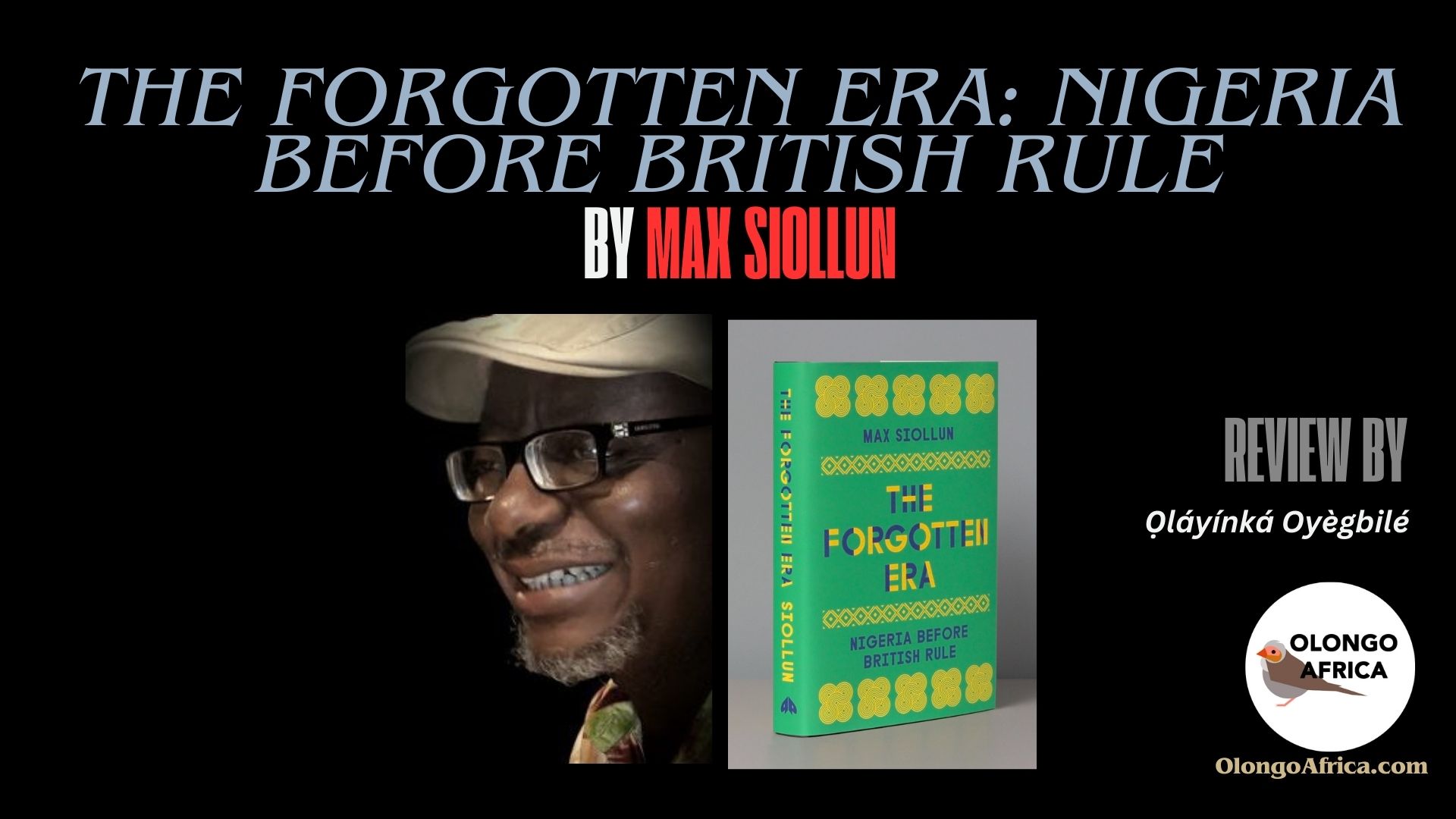
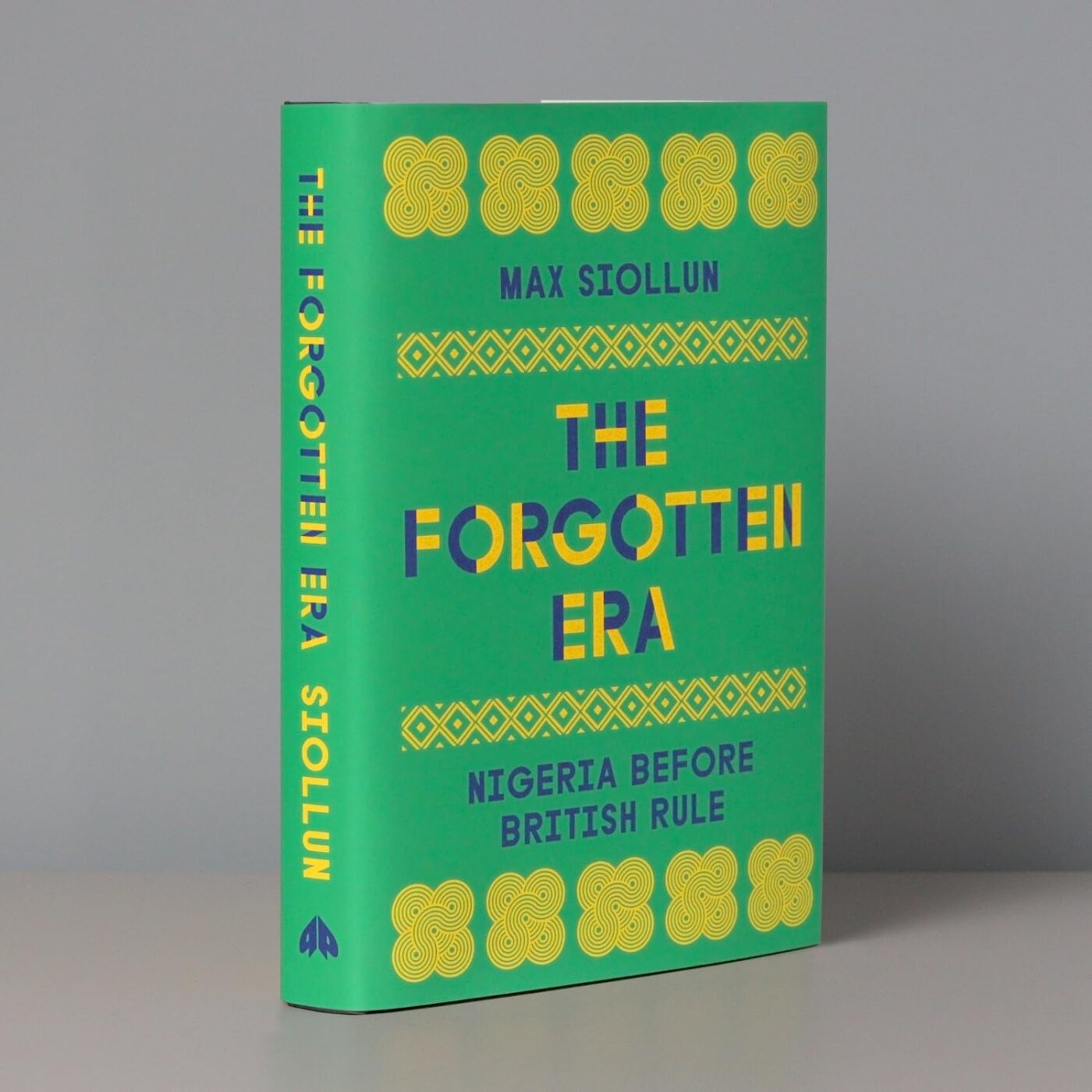
A review of “The Forgotten Era: Nigeria Before British Rule”
For a very long time, what is termed history of Africa or documentation of the people of the continent had been snippets of often biased and racist conjectures cobbled together by some early explorers who visited the continent and thought they knew it more than the people they met on the ground. It was the reason why most African history of the times were dominated by explorers who ‘discovered’ rivers, streams and mountains that Africans lived with and exploring before the arrival of the foreigners.
In the last couple of years, with the growing consciousness of the need to decolonize education, there have been moves to tell the “authentic” history of the continent and situate it in the right and proper perspective. Chinua Achebe, after all, had popularized the proverb that “until the lions have their own historians, the history of the hunt will always glorify the hunter.”
Books about colonialism in Africa had been filled with the ‘civilising’ mission of the colonisers who had embarked on the dangerous and long journey to the continent to save it from perdition. However, not too recent revelations have continued to point in the other direction: the expeditions were mostly fueled by the selfish ambition of the colonisers to exploit the rich human and material resources that are abundant in the ‘new world’. Many historians, anthropologists, archeologists have continued to point to the fact that the histories written about Africa from Cape to Cairo from Libya to Benin Republic are about wars, killings, slavery and rivalries among kings and empires while being blind to the plundering of resources, human and material, that happened behind the scenes to justify the act.
Turning to Nigeria, the stories are about the rise and fall of empires stretching across swathes of land and territories, inter-tribal wars and enslavement and trading in humans, exchange of humans with mirrors, beads etc. But these were not all about Nigeria. It is in the light of this that Max Siollun’s book offers great service to this part of the history.
The writer turns to those enlivening stories of the country long before the British cobbled a disparate group of peoples together into one. This, not necessarily for the benefit of the people but for its own administrative convenience and long-term gain. Stating why he embarked on the book project, the writer states. “Existing histories of Africa are usually of slavery, colonialism, or of Europeans ‘discovering’ African cities, mountains, rivers, and other landmarks that the natives had somehow not noticed (in other words, a history of what Europeans did in Africa, rather than a history of Africans themselves).” (pxi).
It is on this basis that Siollun embarked on writing this important book. Divided into thirteen chapters and a conclusion, the author treats his topics with majestic candour and a finesse that makes the reading smooth and engaging.
The first chapter takes a look at the Hausa states, the ones called “the Seven Legitimate Ones, and takes the reader through the myths of the founding of the seven towns of the Hausa. It then dovetails into the next chapter on the Kanem Borno Empire. This establishes the fact that Islam came to the north first through this empire and not to the Hausa states. This has been a matter of knowledge to some and explains why that part of the country has a sort of uneasy relationship with the caliphate. The first four chapters is devoted to the detailed history of the north before the encounter with the colonial agents.
The next two chapters deal with the Yorùbá ‘nation’ or empire in which the author gives detailed accounts of this empire that stretched across the southwest to what is today part of Benin Republic and its awesome power and internal dynamics that led to its eventual crumbling. The Odùduwà myths and the controversy of who preceded whom with Benin City are fairly tackled. From documents available then, the Benin royal court had the first encounter with Europeans but failed to mine it. He observes, “Benin’s relations with Portugal can be viewed as a series of missed opportunities and ‘what if’? questions. Benin had an almost 400-year head start over many other Nigerian societies in access to European education, materials, technology and weapons. It also had several advantages to emerge as the pre-eminent economic and political power throughout what is now Nigeria.” (p176). But this was a lost opportunity for Benin because, “What Benin did not accept from Portugal when it had choice and leverage, it was forced to accept 300 years later by force…” (p178). Talk of missed golden opportunity!
In the eighth chapter which he titled “A remarkable mysterious people”, he focuses on the Igbo people of the South East of who he writes, “Identifying who Igbos are is a challenge. The origin of the word is obscure” (p180) and declaring that “Even then, some of those who are described as Igbo were, and remain hostile or reluctant to being described as such.” (p181). Perhaps that was in the past. However, this is for some of them scattered across some states in the Niger Delta of today.
Siollun — who has written many books about Nigeria — has become a kind of an authority on anything Nigerian. The Forgotten Era: Nigeria Before British Rule is a comprehensive history of Nigeria before the intervention of colonialism. It could be described as a capsule of our country’s history. It would be useful to all who may not be chanced to read the various history books about the countless numbers of nationalities that make up Nigeria. It can be faithfully described as an executive summary of Nigeria’s history. However, the writer did not focus much on the other section of the country.
It, in my opinion, falls into the usual pitfalls that most people who document the history of the country fall into. The book dwells very much on what has come to be known as the ‘majority’ ethnic groups in the country with little or no mention of the so-called minority groups. For instance, the Jaja of Opobo story is central to the struggle of the Niger Delta people but there was no mention of his valiant role. It may be said that the book is about the country before British rule, but Jaja was a force to be reckoned with, and that was why he had the confrontation with the colonial masters.
This does not in any way distract from the valuable job the writer has done to tell the story of Nigeria and its valiant people before colonialism. It is a great book that should be read for reeducation.
Nigeria is now 65, marked on October 1, 2025. Is the country ready to listen to Siollun? He writes:
“Ironically, Nigeria has not tried the system of government that served most of its communities in the pre-colonial era. Pre-colonial rulers delegated substantial powers to sub-regional lieutenants and operated confederal systems of government (which lasted for 800-1000 years in the Hausa States, Kanem Borno and Yoruba Kingdoms). Nigeria has not replicated confederal system in any of its post-colonial governments. Despite plenty historic evidence that confederacy is the system of government that Nigerians have most been accustomed to.” (p329).
Is this the solution to the present convoluted federal system?
A few years back the country was zoned into six geo-political zones. “With hindsight, perhaps these six zones should have been the basis for six different nations to emerge from British colonial rule, rather than one huge Nigerian state,” the writer concludes. (p333).
The big elephant in the room is: who will bell the cat?
___
Dr Oyègbilé is a journalist, writer and media scholar