A Mind at Full Stretch: Remembering Bíọ́dún Jéyǐfó
By Sọlá Adéyẹmí (University of East Anglia, UK)
There are scholars whose passing feels like the quiet extinguishing of a star; and there are others whose departure alters the very atmosphere of intellectual life. Bíọ́dún Jéyǐfó belonged firmly to the latter category. His death at the age of eighty is not simply the loss of a formidable critic, teacher, playwright, and public intellectual; it is the closing of a chapter in African thought, one defined by moral clarity, political courage, and a lifelong commitment to the emancipatory possibilities of culture. As I commented on his death, his passing marks not only the loss of a towering scholar but the quiet extinguishing of a particular intellectual temperament, one forged in struggle, sharpened by principle, and sustained by an unwavering belief in the emancipatory power of thought. That sentence remains true, but it now feels insufficient — a single candle held up to a vast, intricate architecture of influence.
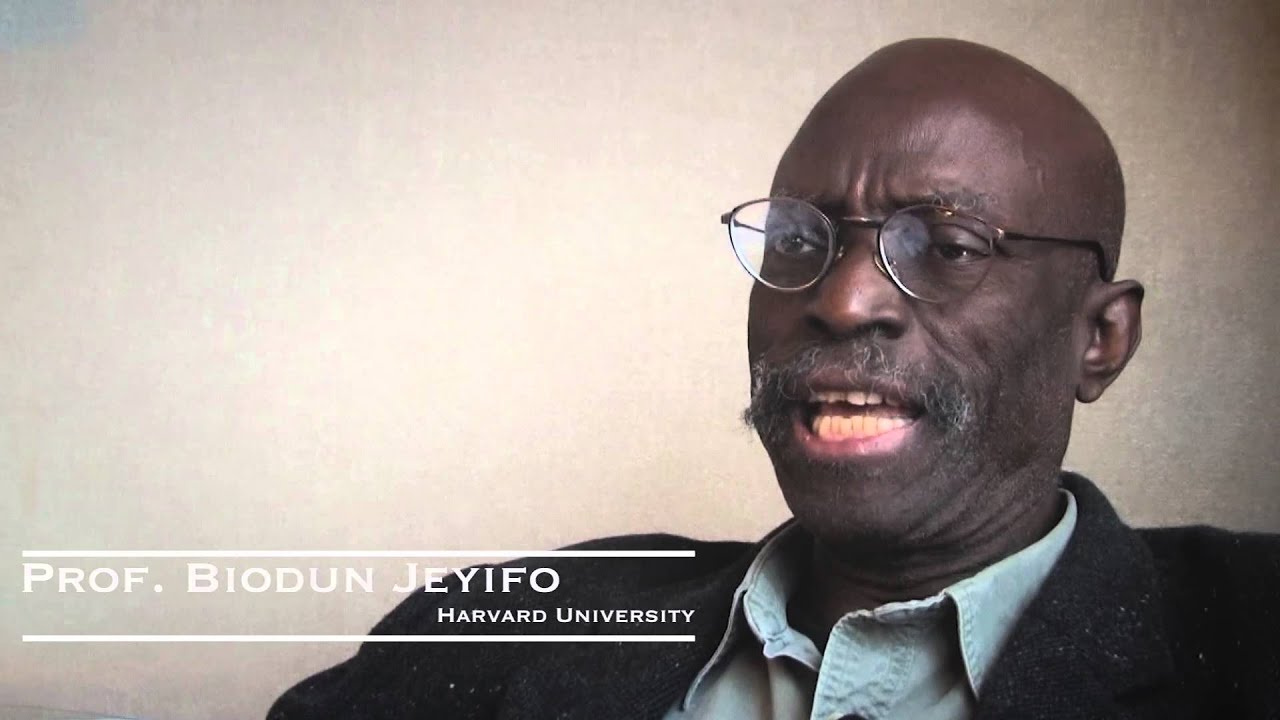
To remember Jéyǐfó is to remember a mind at full stretch: a mind that refused complacency, that insisted on rigour, that believed criticism must be accountable to the lived experiences of ordinary people. It is to remember a man who embodied the best of the African intellectual tradition — fierce in debate, generous in mentorship, grounded in community, and committed to the idea that thought, at its best, is a form of service.
I. Origins: Ìbàdàn and the Making of a Radical Humanist
Bíọ́dún Jéyǐfó was born on 5 January 1946 in Ìbàdàn, at a moment when Nigeria was still negotiating the complexities of late colonial rule. His childhood and youth unfolded against the backdrop of a society in transition: the waning of British imperial authority, the rising energies of nationalism, the turbulence of independence, and the cultural efflorescence that accompanied the emergence of modern African literature. These forces shaped him profoundly. They gave him a sense of history as something lived rather than abstract, and they instilled in him a conviction that culture — theatre, literature, performance — was not a luxury but a vital instrument for understanding and transforming society.
The University of Ìbàdàn, where he studied English, was the crucible in which these convictions took shape. Ìbàdàn in the late 1960s was not merely a university campus; it was a world of ideas in motion. The presence of Wọlé Ṣóyínká, J. P. Clark, Chinua Achebe, and the Mbari Club in the centre of Ìbàdàn city created an intellectual climate in which young scholars were compelled to think critically about the role of culture in a rapidly changing society. The ferment of the era, including political independence from Britain, civil war (or Nigeria-Biafra war of 1967-1970), radical student movements, all sharpened his political sensibilities and deepened his commitment to the idea that the aesthetic and the political were inseparable.
At Ìbàdàn, he earned a first-class degree in English Literature and encountered the ideas that would shape his life’s work: Marxist theory, Yorùbá performance traditions, and the conviction that criticism must be grounded in the lived experiences of ordinary people. These commitments would remain constant, even as his thinking evolved and deepened over the decades. It was here, too, that he first encountered the Marxist humanism that would become the ethical core of his intellectual life. For him, Marxism was never a doctrinaire system; it was a method of reading the world, a way of attending to the structures of power that shape everyday life, and a commitment to the dignity of those whose labour sustains society.
At Ìbàdàn, he also formed friendships of unusual depth and longevity. One in particular became legendary, not only for its intellectual closeness but for the almost comic symmetry of their physical resemblance: his bond with playwright Fẹ́mi Ọ̀sọ́fisan. The friendship began, characteristically, in the heat of criticism — with Jéyǐfó offering a forthright assessment of Ọ̀ṣọ́fisan’s play The Cooling Spring (1967) after a performance at the Arts Theatre of the university. What might have soured a more fragile relationship instead became the foundation of a lifelong camaraderie built on candour, mutual respect, and a shared impatience with mediocrity.
Their likeness, however — the bushy beards, the large‑rimmed glasses, the restless gait, the air of barely contained impatience — soon became a source of confusion and, on one memorable occasion, unintended mischief. One afternoon, irritated by a librarian’s loud conversation, Jéyǐfó admonished her for disturbing readers. Taking offence at what she perceived as insolence from a gangly student, she promptly banned him from the library for a week. The following day, Ọ̀ṣọ́fisan approached him in the Faculty of Arts quadrangle, bewildered and indignant: he had gone to the library only to be turned away. The librarian, mistaking him for Jéyǐfó, had enforced the ban on the wrong man. It was a small incident, but it became one of the enduring stories of their friendship — a reminder of how easily their identities blurred in the eyes of others, and how firmly they remained distinct in their devotion to each other.
II. The Scholar as Activist: ASUU and the Struggle for Academic Freedom
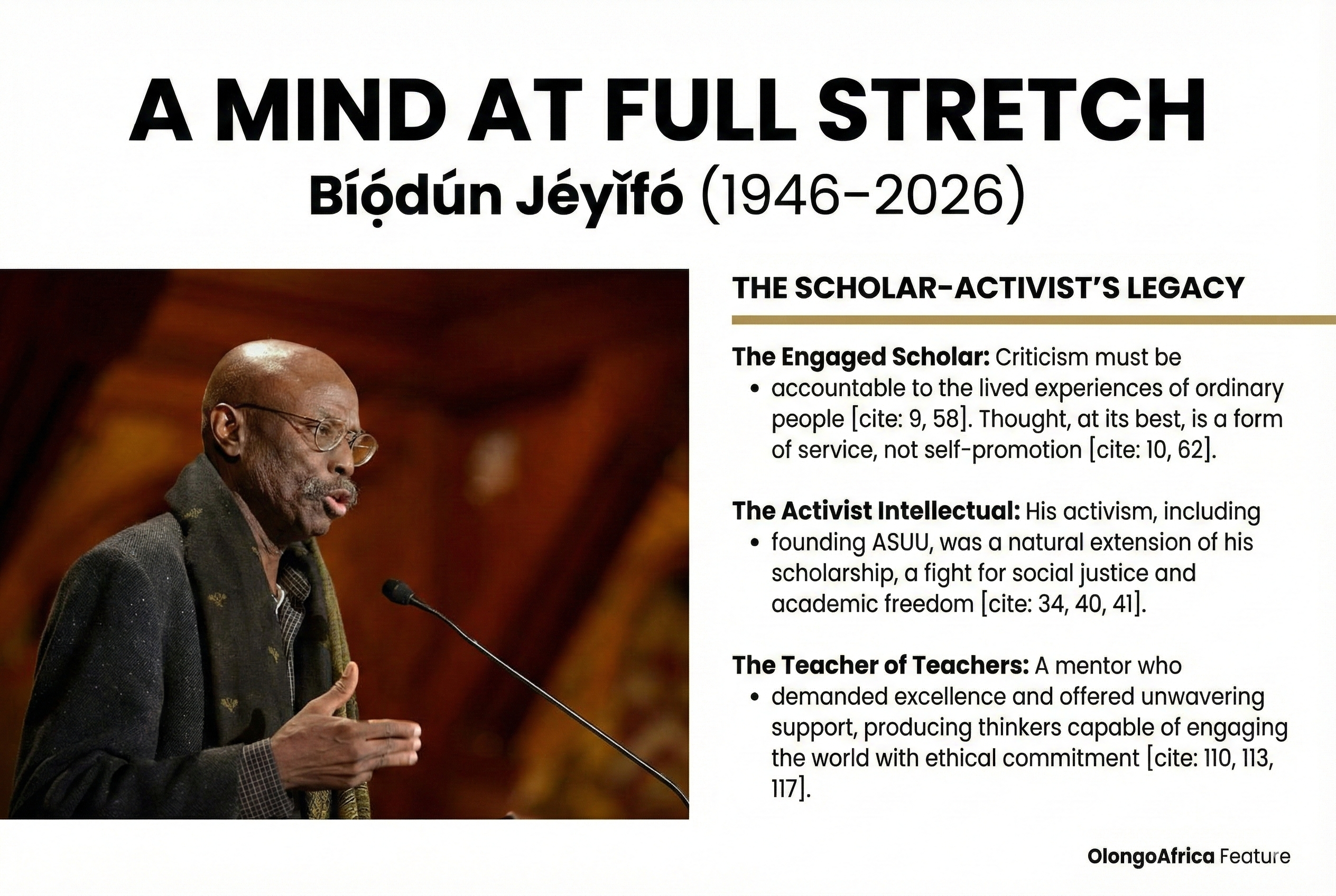
One of the most defining chapters of Jéyǐfó’s early career was his role in the founding and consolidation of the Academic Staff Union of Universities (ASUU). In the 1970s, as the Nigerian university system expanded rapidly but unevenly, military regimes sought to curtail academic freedom. ASUU emerged in 1978 as a crucial site of resistance. Jéyǐfó was one of its pioneering organisers, and served as the National President in 1980, helping to articulate the union’s intellectual and moral foundations.
Those who were there in the early years recall his tireless commitment: travelling the length and breadth of Nigeria in his battered Volkswagen Beetle, visiting campuses large and small, persuading sceptical colleagues, drafting communiqués by candlelight, and building the solidarities that would allow ASUU to withstand decades of political pressure. His leadership was marked by courage, strategic clarity, and an unwavering belief that scholars must stand together if they are to defend the integrity of their work. That sentence captures something essential: his activism was not a detour from his scholarship; it was its natural extension.
For Jéyǐfó, the university was not merely a site of knowledge production but a battleground in the struggle for social justice. His Marxism was grounded in lived experience, and he saw the defence of academic freedom as inseparable from the broader fight against authoritarianism and inequality. In this sense, he belonged to a generation of African intellectuals, including Ngũgĩ wa Thiong’o (Kenya), Eskia Mphahlele (South Africa), Valentin-Yves Mudimbe (DRC), and Abíọ́lá Ìrèlé (Nigeria), who understood that the critic must also be a citizen, that the work of thought is inseparable from the work of freedom.
III. The Architecture of a Critical Life
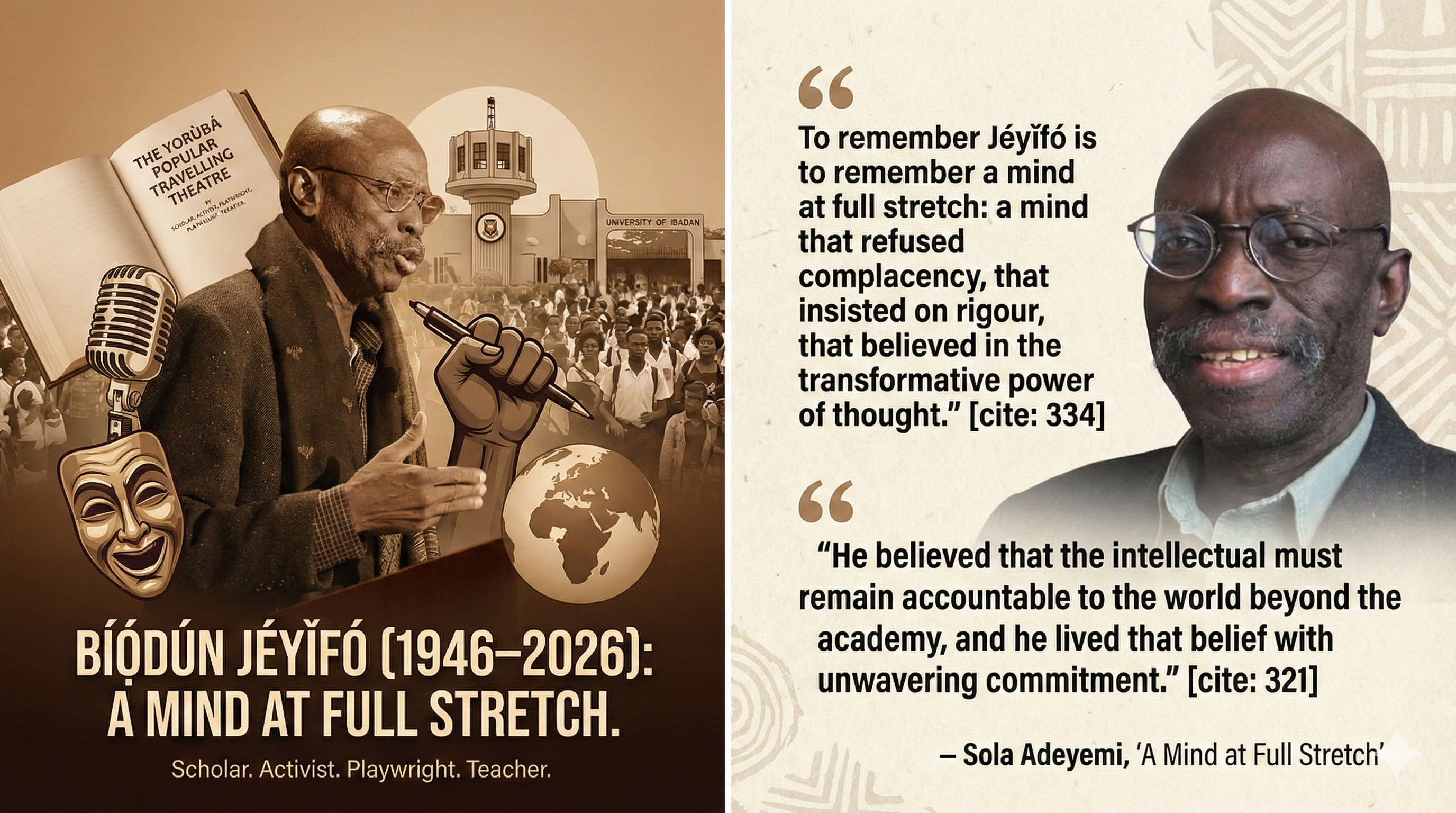
To speak of Jéyǐfó’s scholarship is to speak of a body of work that helped shape the intellectual architecture of African literary and performance studies. His major publications include The Yorùbá Popular Travelling Theatre of Nigeria (1984), a landmark study that redefined the study of Yorùbá performance; Wọlé Ṣóyínká: Politics, Poetics, and Postcolonialism (2004), a major intervention in Ṣóyínká studies; and the influential edited volume Perspectives on Wole Ṣóyínkah: Freedom and Complexity (2006).
But it is in his essays that one encounters the full range of his intellectual power. Essays such as ‘Marxism and the African Predicament’, ‘The African Writer and the Burden of History’, ‘The Alárìnjó Aesthetic and the Politics of Performance’, ‘The Postcolonial Intellectual and the Crisis of Theory’, and ‘The Nature of Things: Arrested Decolonization and Critical Theory’ (1990) remain touchstones in African literary and cultural criticism, widely cited for their analytical clarity and ethical force.
His contributions to theatre studies were particularly influential. He was among the first scholars to articulate a sustained Marxist reading of African drama, arguing that the stage was a site where the contradictions of postcolonial society could be both exposed and imaginatively reconfigured. His work on Yorùbá theatre, especially his analyses of the Alárìnjó tradition and the popular travelling theatre movement, remains indispensable. He understood that these forms were not simply entertainment but complex cultural systems, rich with political insight and philosophical depth.
IV. Positions on the Postcolonial Condition
Jéyǐfó’s intellectual commitments were inseparable from his political convictions, not in the sense of a critic bending scholarship to ideology, but in the deeper sense that his reading of the world was always animated by an ethical demand. His Marxism — never doctrinaire, always humane — was less a rigid framework than a disciplined attentiveness to structures of power, labour and inequality. It shaped the questions he asked, the solidarities he forged, and the positions he took in some of the most enduring debates in postcolonial studies. For him, theory was not an abstract exercise but a mode of responsibility: a way of insisting that criticism must remain accountable to the material conditions of ordinary people, to the histories that shaped them, and to the futures they deserved. This is why his interventions carried such force — they emerged from a mind that refused to separate the aesthetic from the political, or the life of the intellect from the life of the community.
- The Role of the Intellectual
He insisted that the postcolonial intellectual must remain accountable to ordinary people, a position he articulated not as moral posturing but as a fundamental condition of critical integrity. Scholarship, he argued, is a form of service, not self-promotion, and the critic who forgets this risks becoming complicit in the very structures of inequality he seeks to analyse. For Jéyǐfó, the intellectual’s task was to illuminate, to clarify, to intervene — always with an eye on the material realities shaping people’s lives. He believed that thought must be tethered to responsibility, and that the life of the mind is inseparable from the life of the community.
- Marxism and the Postcolonial State
He argued that class remained the fundamental analytic category in postcolonial societies, and that authoritarianism was a structural feature of the postcolonial state — not an aberration but a predictable outcome of the social and economic contradictions inherited from colonial rule. For Jéyǐfó, the postcolonial state was less a new political formation than a continuation of older structures of domination, repurposed by local elites who inherited the machinery of coercion without dismantling its logic. His Marxism enabled him to see through the rhetoric of national liberation to the material realities beneath: the consolidation of power in the hands of a narrow class and the persistent marginalisation of workers, peasants, and the urban poor.
He refused romantic nationalism. While he honoured the aspirations of anti-colonial movements, he was unsparing in his critique of post-independence ruling classes who, in his view, betrayed the emancipatory promises of decolonisation. Political independence, he insisted, could not deliver genuine liberation without a radical restructuring of economic relations.
This perspective placed him at odds with liberal critics and cultural nationalists alike. His analyses of military rule were grounded not in moral outrage but in a structural understanding of dependency, uneven development, and elite consolidation. For him, resisting authoritarianism required collective, organised struggle rooted in the lived experiences of ordinary people.
- Language and Decolonisation
While sympathetic to Ngũgĩ wa Thiong’o’s linguistic decolonisation project, he maintained a more flexible, historically attentive position, insisting that the politics of language could not be separated from the politics of class. For Jéyǐfó, the issue was never simply whether African writers should abandon English for indigenous languages, but whether their linguistic choices were shaped by material conditions that cultural nationalism alone could not resolve. He recognised the symbolic power of Ngũgĩ’s call to “decolonise the mind”, yet understood that language in postcolonial societies was entangled with access, literacy and uneven educational structures.
English, he argued, was undeniably a colonial imposition, but it had also become a shared medium through which millions navigated modernity and articulated new identities. A wholesale rejection of English risked romanticising precolonial purity while ignoring classed realities. What mattered was not the language itself but the social commitments embedded in its use — the audiences it addressed and the structures of power it challenged.
- Popular Culture as Theory
His work on Yorùbá performance challenged the hierarchy that privileged written literature over performance, arguing that popular theatre encoded complex political, historical, and philosophical insights. For Jéyǐfó, forms such as the Alárìnjó tradition and the travelling theatre were not merely entertainment but sophisticated modes of theorising social life. They offered frameworks for understanding power, community and resistance, often with a clarity and immediacy that academic discourse struggled to match. In this sense, popular culture became both archival and analytic method.
- Gender and Social Justice
Although not primarily a gender theorist, he engaged feminist scholarship with a seriousness that set him apart from many of his contemporaries. For Jéyǐfó, gender was never an optional add-on to class analysis or a fashionable theoretical diversion; it was a structural question demanding the same rigour he applied to labour, culture and the state. He argued consistently that gender oppression was inseparable from class and economic structures, and that any critique of postcolonial society that ignored women’s lived realities was incomplete, if not complicit in the inequalities it claimed to oppose.
His engagement with African feminist thinkers — from Mọlará Ògúndípẹ̀-Leslie and Amina Mama to Obioma Nnaemeka and Oyèrónkẹ́ Oyěwùmí — was marked by respect, curiosity and a willingness to revise his assumptions. He recognised that feminist scholarship had expanded African cultural criticism, compelling Marxist and nationalist thinkers to confront the gendered dimensions of power and representation. He rejected the false binary between Marxism and feminism, seeing African feminist criticism as a necessary enrichment of Marxist analysis. Long before intersectionality became a theoretical commonplace, he understood that struggles against class exploitation, gender oppression and cultural marginalisation were deeply intertwined, and that any emancipatory project had to address them together.
If the first half of Jéyǐfó’s intellectual life was shaped by the crucible of Ìbàdàn, the second half unfolded across continents, classrooms, and critical traditions. Yet wherever he went, he carried with him a distinctly Nigerian, distinctly Yorùbá, distinctly radical sensibility; one that refused to separate the life of the mind from the life of the people. His work, whether in Lagos or Cambridge, Ìbàdàn or Ithaca, was animated by the same conviction: that ideas matter, that criticism is a form of ethical labour, and that the intellectual must remain accountable to the world beyond the academy.
V. Creative Work and the Ethics of Imagination
Although best known as a critic, Jéyǐfó was also a playwright and poet. His creative works were fewer in number than his essays, but they were marked by the same intellectual ambition and ethical commitment. Haba Director! (c1982), his most widely discussed play, is a sharp, satirical exploration of power, memory and the burdens of history. It is a work that reveals his deep understanding of the theatre as a space where social contradictions can be staged, interrogated and reimagined.
His poetry, though less widely circulated, offers a glimpse into a more intimate side of his sensibility. Here, the fierce critic gives way to a quieter, more contemplative voice — one attentive to the rhythms of everyday speech, the textures of ordinary life, and the emotional undercurrents that shape human experience. In poems such as “The Poet as Worker”, “Elegy for the Living” and “Song of the Unclaimed”, one encounters a lyrical clarity that mirrors the precision of his critical prose, but also a tenderness, a reflective warmth, that those who knew him personally will recognise.
What is striking about his creative work is not simply its thematic richness but its ethical orientation. For Jéyǐfó, the imagination was not an escape from the world but a way of engaging it more deeply. His plays and poems are animated by the same commitments that shaped his criticism: a belief in justice, a concern for the oppressed, and a conviction that art can illuminate the structures of power that shape our lives.
VI. The Teacher of Teachers
To speak of Jéyǐfó’s teaching is to speak of a vocation rather than a profession. He was, in the fullest sense, a teacher of teachers. Generations of students, first, in Nigeria, and later in the United States, China, and elsewhere, remember him as a mentor who demanded excellence but offered unwavering support. He had a gift for making difficult ideas accessible without diluting their complexity, and he encouraged his students to think critically, write boldly, and engage the world with intellectual honesty.
His seminars were legendary. Students recall the intensity of his discussions, the precision of his questions, the generosity of his feedback. He had a way of drawing out the best in his students, of pushing them to articulate their ideas more clearly, more rigorously, more courageously. He was not interested in producing disciples; he wanted to produce thinkers — people capable of engaging the world with the same seriousness and ethical commitment that he brought to his own work.
Many of these qualities were celebrated in the tributes marking his 80th birthday in January 2026, only a month before his death. Former students spoke of him with a mixture of reverence and affection, recalling not only his intellectual brilliance but his kindness, his humour, his humanity. He was, in the best sense, a teacher of teachers — someone whose influence will continue to shape the field for decades to come.
VII. Later Years: A Global Intellectual with Local Roots
In his later years, as he moved between Nigeria and the United States, Jéyǐfó remained a vital presence in global conversations about African literature and culture. He continued to write, teach and mentor, even as he battled the health challenges that come with age. His mind remained sharp, his curiosity undiminished. He was particularly interested in the new generation of African writers whose work was reshaping the continent’s literary landscape; writers such as Chimamanda Ngozi Adichie, Tẹ́jú Cole, Tsitsi Dangarembga, and Koleka Putuma.
Yet for all his global engagements, he remained deeply rooted in Nigeria. He returned frequently to Ìbàdàn, the city of his birth, and maintained close ties with colleagues, students and friends across the country. His death on 11 February 2026 in Ìbàdàn has been felt with poignancy, for he was not merely a scholar but a custodian of the nation’s cultural memory.
The tributes that followed his passing were a testament to the breadth and depth of his influence. Scholars praised his intellectual courage; writers celebrated his critical insight; former students spoke movingly of his mentorship; and theatre practitioners honoured his contributions to the study of African performance. In Nigeria, his passing was marked by a sense of collective loss — the feeling that a voice of rare clarity and moral force had been silenced.
VIII. A Life of Purpose: The Legacy of Bíọ́dún Jéyǐfó
What, then, is the legacy of Bíọ́dún Jéyǐfó? It is tempting to answer this question by listing his publications, his awards, his contributions to the field. But his legacy cannot be captured by a bibliography alone. It is found in the countless students he taught, the colleagues he supported, the writers he championed, and the institutions he helped strengthen. It is found in the conversations he sparked, the debates he enlivened, and the intellectual communities he nurtured.
His legacy is also found in the example he set: that of a scholar who believed that ideas matter, that criticism must be grounded in ethical commitment, and that intellectual life is inseparable from the pursuit of truth and justice. He showed that it is possible to be rigorous without being rigid, passionate without being dogmatic, and critical without losing sight of others’ humanity.
He belonged to a generation of African intellectuals who understood that the work of thought is inseparable from the work of freedom. They believed that literature and culture were not merely aesthetic pursuits but vital instruments for understanding and transforming society. In this sense, Jéyǐfó’s life and work stand as a reminder of what is possible when the intellectual vocation is pursued with seriousness, courage, and humility.
IX. The Personal and the Communal
It is easy, in writing about a figure of such stature, to focus on the public intellectual and forget the person. But all who knew him personally speak of a man of great warmth, humour, and generosity, a man not afraid of revealing vulnerabilities and a willingness to engage, a man who showed understanding beyond critical valuation of human frailties. He was a devoted father to his children — Okùnọlá Bámidélé, Ọlálékan (Lek) Babájídé and Ruth Àyọ̀ká — who were the source of his deepest joy. He was a loyal friend, a supportive colleague, a mentor who gave freely of his time and energy.
He was also a man of deep integrity. He lived his life according to the principles he espoused in his work, and he held himself to the same standards he demanded of others. He believed in justice, in equality, in the dignity of all people. He believed that the intellectual must remain accountable to the world beyond the academy, and he lived that belief with unwavering commitment.
X. The Future of African Thought: What Remains After a Giant Departs
The death of a figure like Bíọ́dún Jéyǐfó inevitably raises questions about the future of African literary and cultural criticism. What happens when a giant departs? What remains? What is lost? What must be built anew?
The answer, I think, lies in the communities he helped create. His influence is not confined to his books or his essays; it is embodied in the generations of scholars, writers and students, including me, who have been shaped by his work. It is embodied in the institutions he helped strengthen, the conversations he helped initiate, the intellectual traditions he helped sustain.
His passing leaves a void, but it also leaves a legacy, a legacy of thought, of commitment, of ethical engagement. It is a legacy that challenges us to think more deeply, to write more courageously, to engage the world with the same seriousness and humanity that he brought to his work.
XI. Closing: A Mind at Full Stretch
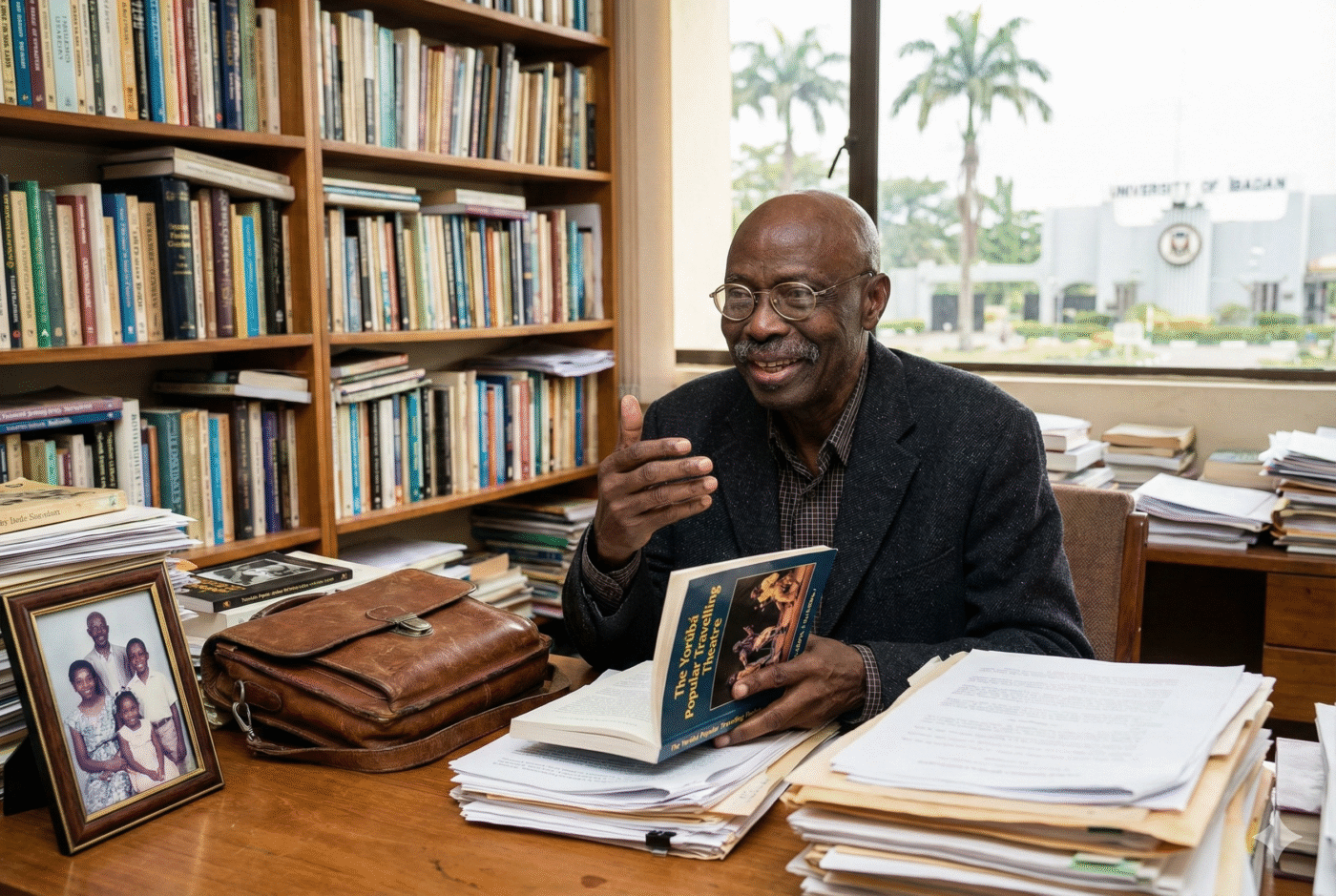
In mourning his death, we also celebrate his life: a life dedicated to the pursuit of knowledge, the defence of justice, the nurturing of young minds, and the creation of art that speaks to the deepest truths of human experience. His voice may be silent, but his words remain, resonant and alive, guiding us towards a more thoughtful, more just, and more humane future.
To remember Bíọ́dún Jéyǐfó is to remember a mind at full stretch, a mind that refused complacency, that insisted on rigour, that believed in the transformative power of thought. It is to remember a man who embodied the best of the African intellectual tradition, and whose legacy will continue to shape the field for generations to come.
But listen:
in the hush between heartbeats,
you can still hear
the laughter stored in the rafters,
the questions rustling the leaves,
the footsteps folded into the soil
like seeds waiting for rain.
_______
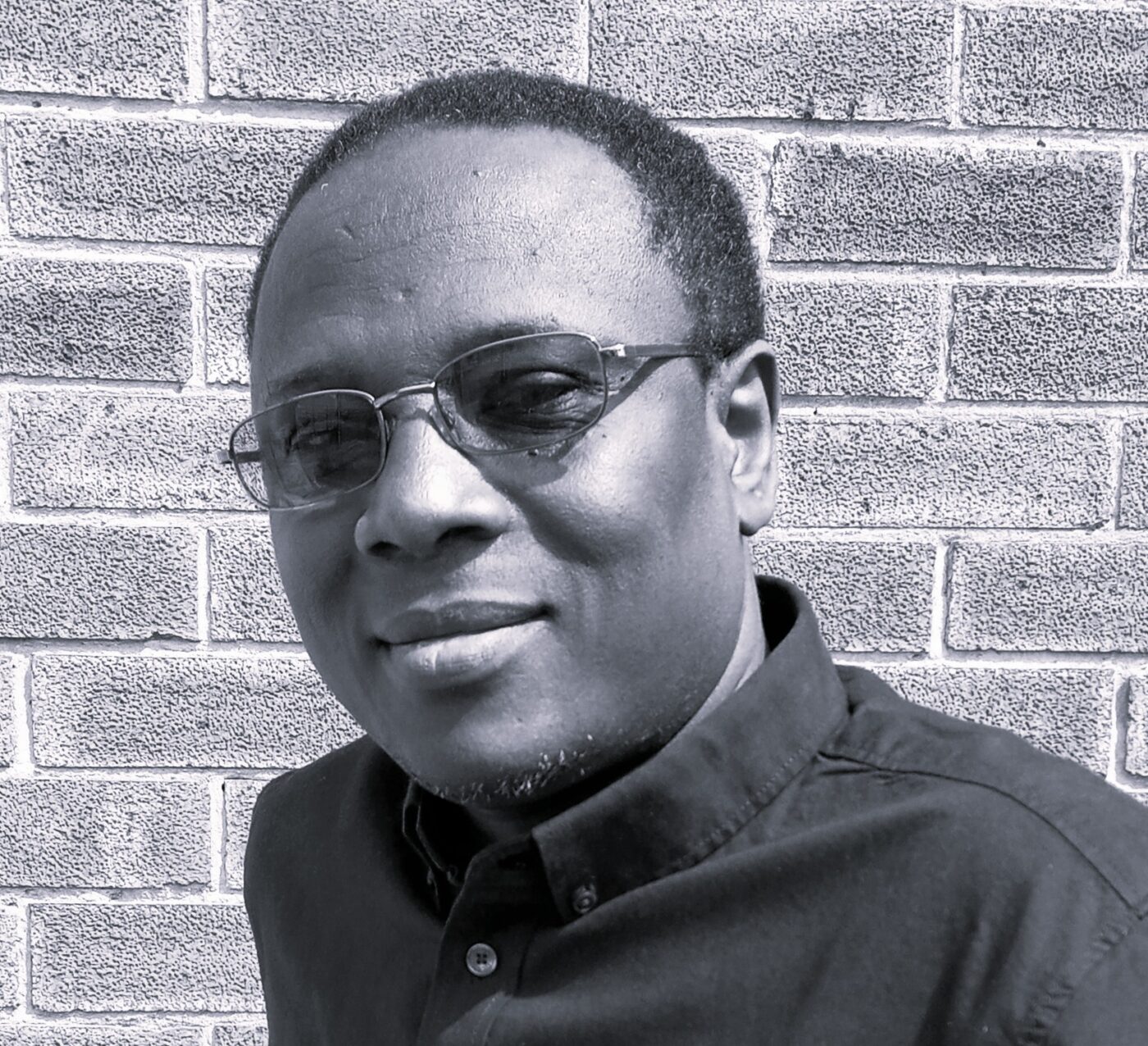
Sọlá Adéyẹmí is a scholar, poet, and essayist. He teaches Global Theatre and Postcolonial Literature at the University of East Anglia, Norwich, United Kingdom